

Acidizing/stimulation

The Acid Stimulation Technical Section aims to provide a global home for engineers, scientists, researchers, and practitioners working on acid stimulation in carbonate and sandstone reservoirs.

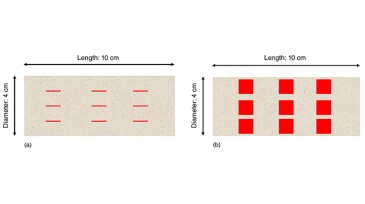
This paper presents a case study of a tool-free fishbone fracture stimulation technology using sand jetting and acidizing in openhole wells, providing a technical solution for low-permeability and complex-lithology carbonate reservoirs in the Middle East.

This paper presents a case study of oriented tubing-conveyed perforation followed by an acidizing operation to overcome technical challenges posed by a depleted reservoir targeted for a carbon capture, utilization, and storage project.
-
 This paper reviews existing literature, the operator’s records, service-company data, and simulation studies to assess the risk of using seawater in carbonate acidizing.
 -
The paper describes a project in which extremely challenging stimulations were performed in a fractured tight carbonate in a complex strike/slip stress faulting regime with high tectonic stresses.
-
The works highlighted in this year’s Acidizing feature demonstrate novel, diverse innovations in sustainability, enhanced productivity, and logistical efficiency by authors of SPE conference papers.
-
This paper reviews fracturing-program design, completion technology, real-time data collection, data integration, and lessons learned for the Pikka development on the North Slope of Alaska.
-
A Chinese operator in the Sichuan Basin used high‑frequency pressure monitoring to evaluate frac performance in unconventional wells.
-
This study explores enhancing gas production through a novel combination of prestimulation using a coiled tubing unit and high-rate matrix acidizing.
-
The authors of this paper describe a method of stimulating a multizone hydrocarbon-producing well wherein a tool is deployed downhole by wireline to generate acid vapor at a target depth, allowing each interval to be treated uniquely.
-
This paper extends an integrated two-scale continuum model that contemplates mass, momentum, and energy changes to study the acid-stimulation process in complex carbonate acid-stimulation systems with the development of fracture and vug networks.
-
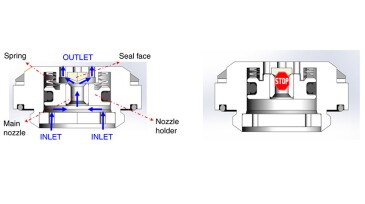
The authors of this paper write that autonomous outflow-control devices can positively affect matrix acidizing by providing the best possible conformance.
-
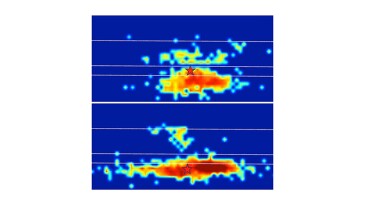
In this work, microseismic observations are integrated with strain and other observations to investigate the microseismic response in relation to the underlying hydraulic fracture geometry for different rock types.



Page 1 of 10