AI/machine learning

As digital technologies become commonplace, industry leaders say core engineering knowledge remains essential for making informed decisions and avoiding costly mistakes.

The deals, with a potential value exceeding $3.7 billion, are aimed at strengthening Saudi Aramco’s supply chains and expanding its use of industrial artificial intelligence.

This work applies fuzzy logic, a well-established artificial-intelligence technique, to quantitatively assess connectivity between injectors and producers in a giant presalt field in the Santos Basin of Brazil.
-
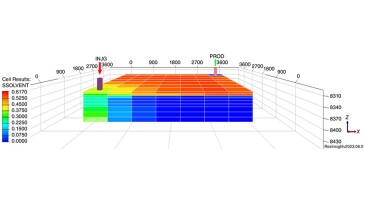
 The authors present an open-source framework for the development and evaluation of machine-learning-assisted data-driven models of CO₂ enhanced oil recovery processes to predict oil production and CO₂ retention.
 -
The grant was awarded by the Scottish Funding Council in partnership with Scottish Enterprise to assist in developing an AI demonstrator to optimize subsea decommissioning.
-
Undocumented orphaned wells pose hazards to both the environment and the climate. Scientists are building modern tools to help locate, assess, and pave the way for ultimately plugging these forgotten relics.
-
As we turn the page on our 75th anniversary, JPT’s recent visit to the UAE offers a front-row seat of what some of the industry’s biggest players see coming.
-
The USGS has said up to 19 million tons of lithium resource is contained in the briny waters of the Smackover formation in Arkansas.
-
Subject-matter experts from industry and academia advanced distributed fiber-optic sensing technologies and their implementation in flow measurement during a special session.
-
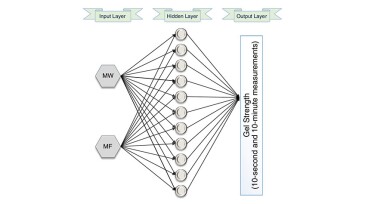
This paper investigates the use of machine-learning techniques to forecast drilling-fluid gel strength.
-
Technology uptake aimed at optimizing resources, delivering consistency, and augmenting what humans can do.
-
Machine learning and a decade of gas composition records helped the operator identify wells that were most likely to produce paraffins.
-
The companies plan to develop new artificial-intelligence-powered processes and workflows to optimize oil and gas production.