AI/machine learning

This research focuses on combining physics-based expert rules with machine learning to improve the detection of failure-related events in electrical submersible pumps.

A combination of physics principles and machine-learning techniques is used in this work to develop a virtual flowmeter for oil-production optimization in electrical-submersible-pump-lifted oil wells, resulting in reliable generalization.

This paper presents the deployment of an artificial intelligence-enabled autonomous gas lift optimization system, integrating real-time centralized advanced process control with cloud-based analytics to enhance artificial gas lift performance in producer wells.
-
 The authors of this paper describe a technology built on a causation-based artificial intelligence framework designed to forewarn complex, hard-to-detect state changes in chemical, biological, and geological systems.
 -
This paper presents a family of machine-learning-based reduced-order models trained on rigorous first-principle thermodynamic simulation results to extract physicochemical properties.
-
Health, safety, and environment operations can be greatly enhanced by using artificial intelligence (AI) techniques on HSE data. One important aspect inherent in this process is the need to establish trust in the AI system among the users.
-
Registration is open for the SPE Europe Energy GeoHackathon, which will be held in October and November. It will be preceded by 4-week online bootcamp sessions on data science and geothermal energy, which will begin on 2 October.
-
This article presents the application of a reinforcement learning control framework based on the Deep Deterministic Policy Gradient. The crack propagation process is simulated in Abaqus, which is integrated with a reinforcement learning environment to control crack propagation in brittle material. The real-world deployment of the proposed control framework is also dis…
-
SPE and Project Innerspace are organizing the first Geothermal AInnovation Competition. Teams from around the world are invited to participate in this virtual competition aimed at showcasing the potential of AI-assisted work flows in the geothermal life cycle.
-
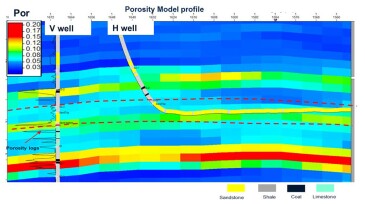
The authors of this paper describe a solution using machine-learning techniques to predict sandstone distribution and, to some extent, automate the process of optimizing well placement.
-
This paper describes a work flow that integrates data analysis, machine learning, and artificial intelligence to unlock the potential of large relative permeability databases.
-
Artificial intelligence (AI) tools have been used in geological survey methods for many years. Gaining insight into the scale and trends of this implementation could assist surveyors in making informed decisions about buying or developing new technologies.
-
Oil and gas operators such as Shell and Oxy are now employing AI together with a vast network of sensors and other machine-learning software to stamp out problems before they happen.