AI/machine learning

This research focuses on combining physics-based expert rules with machine learning to improve the detection of failure-related events in electrical submersible pumps.

A combination of physics principles and machine-learning techniques is used in this work to develop a virtual flowmeter for oil-production optimization in electrical-submersible-pump-lifted oil wells, resulting in reliable generalization.

This paper presents the deployment of an artificial intelligence-enabled autonomous gas lift optimization system, integrating real-time centralized advanced process control with cloud-based analytics to enhance artificial gas lift performance in producer wells.
-
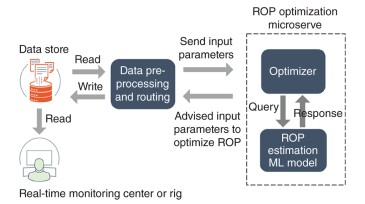
 The authors of this paper discuss a global rate-of-penetration machine-learning model with the potential to eliminate learning curves and reduce time and costs associated with developing a new model for every field.
 -
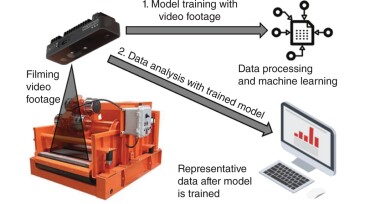
The authors of this paper describe a project that demonstrated the feasibility of using deep-learning and machine-learning approaches to introduce camera-based solids monitoring to the drilling industry.
-
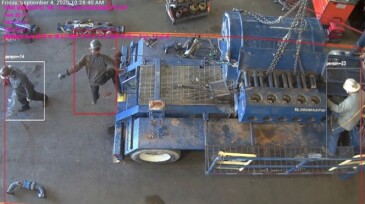
Vision analytics is being used to extract insight information from video, with data inferred from existing cameras used to create a monitoring dashboard where supervisors can receive alerts at the worksite level or drill down to specific events.
-
GlobalData’s report "Robotics in Oil and Gas" notes that, while robotics has been a part of the oil and gas industry for several decades, growing digitalization and integration with artificial intelligence, cloud computing, and the Internet of Things have helped diversify robot use cases within the industry.
-
The service company said it plans to use DataRobot’s artificial intelligence capabilities in its production-optimization and well-construction digital platforms.
-
Synthetic data generation is a solution that allows citizen data scientists and auto ML users to quickly and safely create and use business-critical data assets. Benefits go beyond democratizing data access, and even those with privileged data access are building synthetic data generators into their work flows.
-
This paper describes a novel method based on machine learning to maintain an evergreen competency database. The tool reduces discrepancies between organizational requirements and the actual talent deployment by using unstructured corporate data.
-
Large geological models are needed for modeling the subsurface processes in geothermal, carbon-storage, and hydrocarbon reservoirs. The size of these models contributes to the computational cost of history matching, engineering optimization, and forecasting. To reduce this cost, low-dimensional representations need to be extracted. Deep-learning tools, such as autoenc…
-
Feeding better battery storage with the energy produced by cleaner sources such as solar panels and wind turbines is not a new idea. But are good ideas enough? Or could AI be the answer to unlocking the true value of the next generation of solar and energy innovations?
-
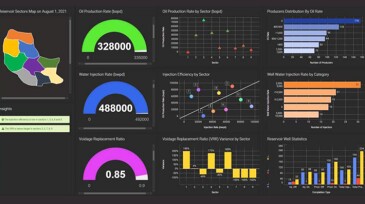
This paper discusses a waterflood optimization system that provides monitoring and surveillance dashboards with artificial-intelligence and machine-learning components to generate and assess insights into waterflood operational efficiency.