AI/machine learning

After years of market shocks, technological breakthroughs, and rising uncertainty, ATCE 2026 will provide new insights on how industry leaders and technical experts are preparing for the next era of the upstream business.

This research focuses on combining physics-based expert rules with machine learning to improve the detection of failure-related events in electrical submersible pumps.

A combination of physics principles and machine-learning techniques is used in this work to develop a virtual flowmeter for oil-production optimization in electrical-submersible-pump-lifted oil wells, resulting in reliable generalization.
-
 Petrolern has received a $1.15-million grant from the US Department of Energy to develop and commercialize its technology that models in-situ stresses by using available data.
 -
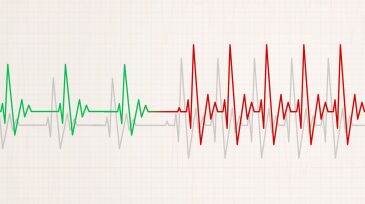
Anomalies in heart function can be diagnosed in real time by measuring an electrical signal. Petroleum engineers have adapted the concept to diagnose anomalous drilling conditions in real time using a shock signature recorded downhole.
-
For oil and gas companies to remain in existence in the second half of the 21st century, they must find ways to dramatically reduce, if not eliminate, their output of carbon dioxide and other greenhouse gases. Artificial intelligence technology could provide one tool to help the energy industry accomplish that staggeringly difficult goal.
-
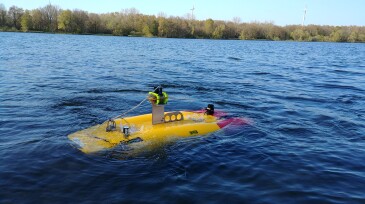
The new DeeperSense project, an international consortium led by the German Research Center for Artificial Intelligence, is working on technologies that combine the strengths of visual and acoustic sensors with the help of artificial intelligence. The aim is to significantly improve the perception of robotic underwater vehicles.
-
Technology is advancing, and applications are growing, but scaling faces technological and human challenges.
-
Algorithms are taking over the world, or so we are led to believe, given their growing pervasiveness in multiple fields of human endeavor such as consumer marketing, finance, design and manufacturing, health care, politics, and sports. The focus of this article is to examine where things stand in regard to the application of these techniques for managing subsurface en…
-
Artificial intelligence is opening new ways to analyze data from microseismic events that occur during hydraulic fracturing. One researcher at Moscow’s Skolkovo Institute of Science and Technology is building a convolutional neural network to get a subsurface view of permeability after fracturing.
-
Wintershall Dea set out to demystify digital for engineers with an informal network of staff experts who help fill the gaps in this new way of doing things and have a focus on maximizing the return on problems previously solved.
-
In the spectrum of artificial intelligence (AI) technologies, those adopted to date in the oil and gas industry are task-focused, narrow applications. Taking AI to the next level cannot be done by Silicon Valley alone.
-
In the complete paper, the authors generate a model by using an artificial-neural-network (ANN) technique to predict both capillary pressure and relative permeability from resistivity.