AI/machine learning

Sustainability in reservoir management emerges not from standalone initiatives but from integrated, data-driven workflows—where shared models, closed-loop processes, and AI-enabled insights reduce fragmentation and make sustainable performance a natural outcome.

Sponsored
In oil and gas operations, every decision counts. For more than 2 decades, SiteCom has been the trusted digital backbone for well operations worldwide, driving insight, collaboration, and efficiency.

This study presents a novel hybrid approach to enhance fraud detection in scanned financial documents.
-
 Large geological models are needed for modeling the subsurface processes in geothermal, carbon-storage, and hydrocarbon reservoirs. The size of these models contributes to the computational cost of history matching, engineering optimization, and forecasting. To reduce this cost, low-dimensional representations need to be extracted. Deep-learning tools, such as autoenc…
 -
Feeding better battery storage with the energy produced by cleaner sources such as solar panels and wind turbines is not a new idea. But are good ideas enough? Or could AI be the answer to unlocking the true value of the next generation of solar and energy innovations?
-
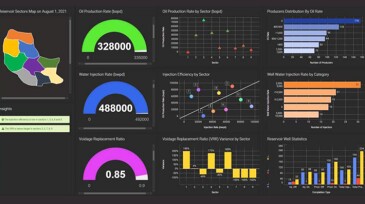
This paper discusses a waterflood optimization system that provides monitoring and surveillance dashboards with artificial-intelligence and machine-learning components to generate and assess insights into waterflood operational efficiency.
-
So far, digital twins have focused mainly on mimicking small, well-defined systems. Integrated asset models, however, tend to address the bigger picture. In this video, Distinguished Lecturer Kristian Mogensen addresses whether we can take the best from both worlds, whether we need to, and how to go about developing such a technical solution.
-
New research led by the University of Glasgow’s School of Psychology and Neuroscience presents an approach to understand whether the human brain and deep neural networks recognize things in the same way.
-
Founded by former analytics experts for a large US independent, Xecta Digital Labs is proposing a new analysis method for horizontal wells. Adopting it means turning the page on some old habits.
-
The authors of this paper develop a model that can predict well-risk level and provide a method to convert associated failure risk of each element in the well envelope into a tangible value.
-
This paper presents agile technologies that integrate data management, data-quality assessment, and predictive machine learning to maximize asset value using underused legacy core data.
-
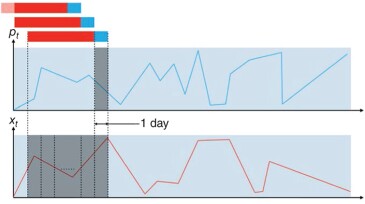
The authors of this paper propose a novel approach to data-driven modeling for transient production of oil wells.
-
Peter Bernard, CEO of Datagration, discusses how oil and gas industry predictive maintenance doesn’t just provide an economic value, it also boosts safety by anticipating unpredicted failures among aging infrastructure.