AI/machine learning

The deals, with a potential value exceeding $3.7 billion, are aimed at strengthening Saudi Aramco’s supply chains and expanding its use of industrial artificial intelligence.

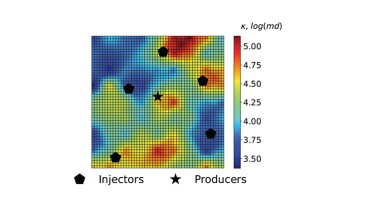
This work applies fuzzy logic, a well-established artificial-intelligence technique, to quantitatively assess connectivity between injectors and producers in a giant presalt field in the Santos Basin of Brazil.

The DOE-backed EGS-Twin project aims to simulate geothermal production systems, helping operators better predict performance and maximize output.
-
 This article is the second in a Q&A series from the SPE Research and Development Technical Section focusing on emerging energy technologies. In this piece, Madhava Syamlal, CEO and founder of QubitSolve, discusses the present and future of quantum computing.
 -
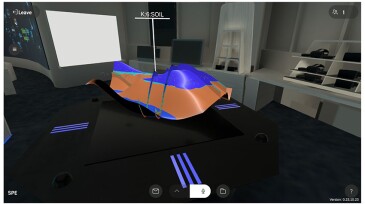
This paper presents an immersive platform that enables multidisciplinary teams and management to make decisions, connecting professionals to demonstrate and share findings in a way that capitalizes on artificial intelligence and cognitive capabilities.
-
The paper showcases the digital journey of a brownfield where digital solutions are enhancing recoverable volume, production, and process efficiency while minimizing losses and maximizing the return of investment.
-
The rapid development of oil and gas intelligent operations depends on artificial intelligence, automation, and data analytics to achieve optimal conditions in oil and gas operations.
-
The full potential of data can only be realized when it is viewed not in isolation but as part of the dynamic triad of hydrocarbons, the data, and the people who interpret it and act on it.
-
Over decades of exploration and production, the oil and gas sector has accumulated vast amounts of legacy data in various formats. Artificial intelligence and machine learning present an opportunity to transform how this unstructured data is processed and used, enabling significant improvements in operational efficiency and decision-making.
-
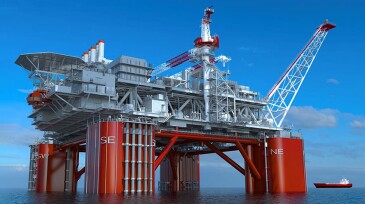
SLB will use artificial intelligence-based software to help ensure the delivery of 18 ultradeepwater wells.
-
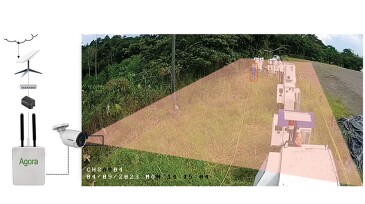
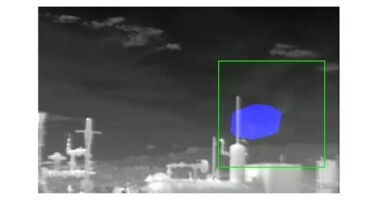
This paper describes a deep-learning image-processing model that uses videos captured by a specialized optical gas-imaging camera to detect natural gas leaks.
-
In this study, a deep-neural-network-based workflow with enhanced efficiency and scalability is developed for solving complex history-matching problems.
-
Whether it’s reviving inactive gas-condensate wells or identifying overlooked reserves in brownfields, operators are making the most of older wells and fields.