AI/machine learning

As digital technologies become commonplace, industry leaders say core engineering knowledge remains essential for making informed decisions and avoiding costly mistakes.

The deals, with a potential value exceeding $3.7 billion, are aimed at strengthening Saudi Aramco’s supply chains and expanding its use of industrial artificial intelligence.

This work applies fuzzy logic, a well-established artificial-intelligence technique, to quantitatively assess connectivity between injectors and producers in a giant presalt field in the Santos Basin of Brazil.
-
 Routine status reporting often presents a challenge because of its intimidating and time-consuming nature for both employees and supervisors. With large language models, a system was developed to generate coherent artificial-intelligence-driven reports. The goal is to enhance the understanding of overall insights and reduce the time required for individual report read…
 -
This paper aims to emphasize the importance of decision-making based on quantitative monitoring outputs, from both a business perspective and an ecosystem-service perspective, in future offshore projects.
-
Experts at SPE’s Annual Technical Conference and Exhibition say that despite AI’s great potential, it’s important to be realistic about AI’s capabilities and to remember that successful projects solve specific business problems.
-
New and evolving artificial lift technology is helping operators improve production rates.
-
This paper delves into the evolving landscape of drilling automation, emphasizing the imperative for these systems to go beyond novelty and deliver quantifiable financial value.
-
The industry’s vast untapped data resources have the potential to change how our industry works—if we can piece it together.
-
This paper presents the processes of identifying production enhancement opportunities, as well as the methodology used to identify underperforming candidates and analyze well-integrity issues, in a brownfield offshore Malaysia.
-
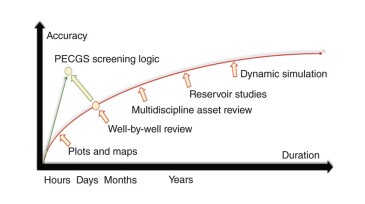
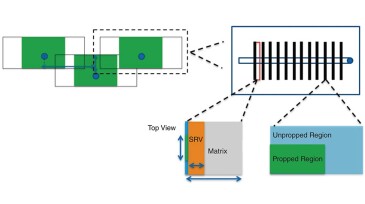
This paper presents a workflow that combines probabilistic modeling and deep-learning models trained on an ensemble of physics models to improve scalability and reliability for shale and tight-reservoir forecasting.
-
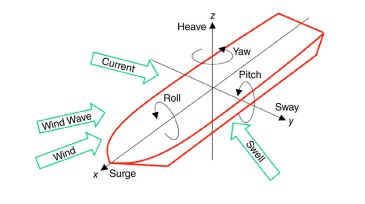
This paper describes a new application that leverages advanced machine-learning techniques in conjunction with metocean forecasts to predict vessel motions and thruster loads.
-
Collaboration and technology will help the industry meet its toughest challenges, experts said during the opening session at ATCE.