AI/machine learning

Known as Arena, the collaboration aims to improve decision-making across increasingly complex reservoirs and growing volumes of subsurface data.

Robotic and autonomous systems are transforming energy operations, but their full value emerges only when paired with data science, engineering analytics, and AI/ML to turn data into decisions. The transition of the SPE Robotic & Autonomous Systems Technical Section into the SPE Data Science & Engineering Analytics Technical Section helps bridge this critical technolo…
A credible custody-transfer record depends on far more than the accuracy of a single meter. It is the product of an integrated measurement chain. While meter performance supports measurement-system integrity, commercial confidence also depends on traceability, governance, and authorization.
-
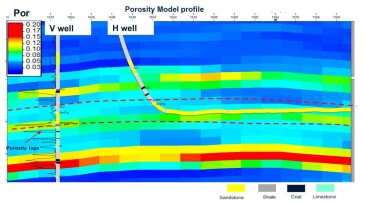
 Machine learning has been shown to have a promising role in oil and gas explorations in recent years. Among the applications, determining a proper location for injection and production wells along with their optimal operating conditions is a complex problem.
-
This article explains what deep learning is and how it works and presents an example use case from the energy industry.
-
The agreement will put SLB’s Delfi software to work in Ineos’ oil and gas operations.
-
This paper presents a family of machine-learning-based reduced-order models trained on rigorous first-principle thermodynamic simulation results to extract physicochemical properties.
-
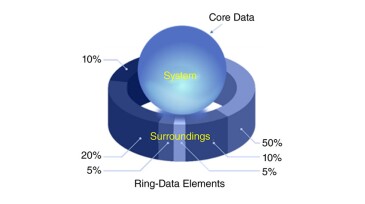
The authors of this paper describe a technology built on a causation-based artificial intelligence framework designed to forewarn complex, hard-to-detect state changes in chemical, biological, and geological systems.
-
Health, safety, and environment operations can be greatly enhanced by using artificial intelligence (AI) techniques on HSE data. One important aspect inherent in this process is the need to establish trust in the AI system among the users.
-
Registration is open for the SPE Europe Energy GeoHackathon, which will be held in October and November. It will be preceded by 4-week online bootcamp sessions on data science and geothermal energy, which will begin on 2 October.
-
This article presents the application of a reinforcement learning control framework based on the Deep Deterministic Policy Gradient. The crack propagation process is simulated in Abaqus, which is integrated with a reinforcement learning environment to control crack propagation in brittle material. The real-world deployment of the proposed control framework is also dis…
-
SPE and Project Innerspace are organizing the first Geothermal AInnovation Competition. Teams from around the world are invited to participate in this virtual competition aimed at showcasing the potential of AI-assisted work flows in the geothermal life cycle.
-
The authors of this paper describe a solution using machine-learning techniques to predict sandstone distribution and, to some extent, automate the process of optimizing well placement.