Artificial lift

Unlike traditional AI approaches that rely primarily on historical data, physics-based AI integrates physical laws, engineering expertise, and operational constraints directly into the learning process. Three recent SPE papers illustrate how this paradigm is transforming the industry through intelligent condition monitoring, virtual sensing, and autonomous production …

This research focuses on combining physics-based expert rules with machine learning to improve the detection of failure-related events in electrical submersible pumps.

A combination of physics principles and machine-learning techniques is used in this work to develop a virtual flowmeter for oil-production optimization in electrical-submersible-pump-lifted oil wells, resulting in reliable generalization.
-
 The accelerating deployment of machine learning and automation is changing the artificial lift landscape. By embedding intelligence into the control loop, operators now can move from reactive decision-making to proactive, continuous optimization.
 -
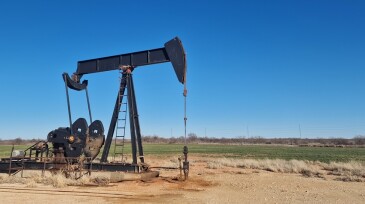
A 2D computational fluid dynamics model is extended to a 3D submodel and validated to provide detailed information on the state of the standing valve as a function of time to assist in sucker rod pump design and operation.
-
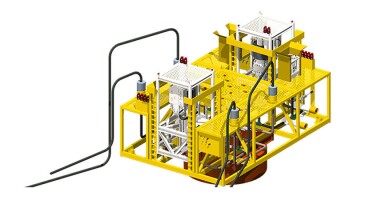
By closely monitoring its subsea boosting system, Shell extended maintenance intervals and safely postponed pump replacement at its ultradeepwater Stones field.
-
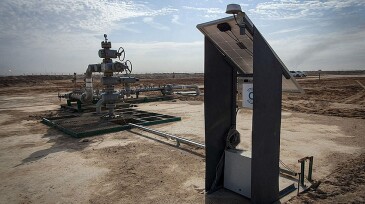
The use of real-time wireless downhole pressure gauges proved a valuable alternative to workover operations in two onshore fields in Iraq.
-
In the wake of the falling number of exploratory wells in the country, Brazil-owned Petrobras addressed audience concerns as well as outlined new avenues for production at the Offshore Technology Conference.
-
Three case studies consider the gas-related reasons electrical submersible pumps fail in unconventional shale environments.
-
Whether it’s reviving inactive gas-condensate wells or identifying overlooked reserves in brownfields, operators are making the most of older wells and fields.
-
SponsoredElectrical submersible pumps (ESPs) are the backbone of artificial lift operations, enabling the extraction of hydrocarbons from challenging reservoirs. However, their effectiveness is often compromised by the extreme downhole environment, characterized by soaring temperatures, high pressures, and exposure to aggressive fluids.
-
ExxonMobil developed an automated system to identify nonproductive and underperforming Permian Basin wells and prioritize high-volume wells to return to production.
-
Technology uptake aimed at optimizing resources, delivering consistency, and augmenting what humans can do.