Artificial lift

Unlike traditional AI approaches that rely primarily on historical data, physics-based AI integrates physical laws, engineering expertise, and operational constraints directly into the learning process. Three recent SPE papers illustrate how this paradigm is transforming the industry through intelligent condition monitoring, virtual sensing, and autonomous production …

This research focuses on combining physics-based expert rules with machine learning to improve the detection of failure-related events in electrical submersible pumps.

A combination of physics principles and machine-learning techniques is used in this work to develop a virtual flowmeter for oil-production optimization in electrical-submersible-pump-lifted oil wells, resulting in reliable generalization.
-
 SponsoredThis article explores the intricacies of this age-old problem, outlining the causes, consequences, and costs of gas locking, as well as highlighting a novel approach to mitigation that has recently been validated by computational fluid dynamics research.
 -
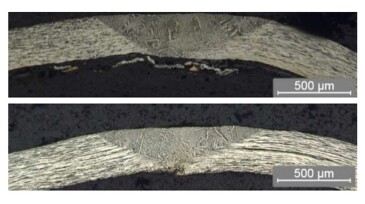
This work presents the results of several failure analyses of gas lift valves retrieved from subsea wells that were unable to prevent backflow from tubing to annulus
-
This paper describes laboratory tests simulating varying sour-well and extended galvanic corrosion conditions to determine the adequacy of selected armor metallurgies in downhole corrosive environments.
-
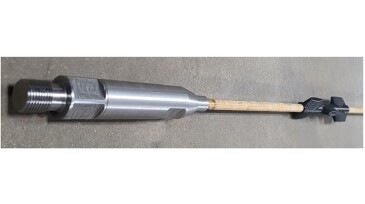
This paper explores the development of fiber-reinforced thermoplastic sucker rods as a promising alternative for overcoming the limitations of steel sucker rods and thermoset fiberglass sucker rods.
-
New and evolving artificial lift technology is helping operators improve production rates.
-
Summer blockbuster season has passed, but it’s always nice to grab a bucket of popcorn and escape reality with a movie. Some movies even teach lessons—as in, sometimes it takes hard work and incremental improvements to advance.
-
This paper presents a multidisciplinary view of the evolution of a development project for the central area of Sururu and the method applied to address challenges and propose solutions.
-
Industry experts advocate for collaboration to develop and test technology that can reduce emissions without breaking the bank.
-
The industry is balancing brains and bots as it squeezes out barrels of oil production.
-
Machine learning is refining gas lift production optimization with scalable automated workflow.