Casing/cementing/zonal isolation

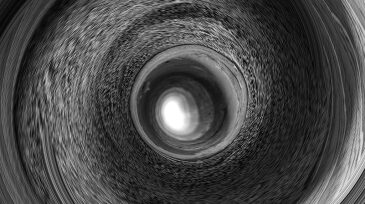
This case study from ARC Resources and DarkVision outlines the use of acoustic imaging tools in two active fracturing programs in Canada to monitor well casing deformation.

This case study outlines a full-scale testing program focused on the behavior of thermal casing connections subjected to severe bending and low-cycle fatigue loading.

As managed pressure drilling gains traction, its principles are influencing a wider range of well-construction activities.
-
 Despite cement’s remarkable properties, the search continues for enhancements in the areas of cost and isolation performance. Efficiencies and enhancements have been explored even to the point of replacing cement with other materials.
-
This paper focuses on cementing-design challenges and discusses the engineering techniques used to approach them.
-
In the Eagle Ford, an integrated approach to engineering and operations was key to optimize performance and improve understanding of the area.
-
Precise casing-wear prediction is important for improving well integrity and longevity, while simultaneously making casing designs more cost-effective. There are no industry guidelines for casing-wear prediction. This article presents a validated predictive model.
-
Cementing is central to the discussion of zonal isolation and well integrity.
-
This work demonstrates cement design that includes evaluating cement-sheath mechanical integrity in intercalated salts.
-
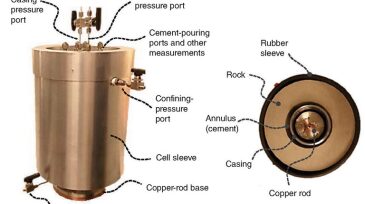
Operators in the North Sea have been concerned about the ability of the cement sheath to maintain sealing integrity because of the increasing number of reported failures in mature wells. This paper presents results from a new laboratory setup to visualize the source of issues.
-
Many wells in the Cana-Woodford shale suffer from chronic sustained casing pressure (SCP) because of poor cement-sheath bonding.
-
The operator of an offshore jackup rig in the North Sea required safe and efficient deployment of the completion string without killing the well during tripping.
-
The Shearwater field is a deep, high-pressure/high-temperature (HP/HT) reservoir located in the UK Central Graben of the North Sea.