Completions

This edition highlights three offshore technology papers that address a common industry theme: how targeted engineering solutions can reduce uncertainty, shorten operations, and make technically constrained offshore well activities more executable.

Three papers are highlighted as the primary contributions because of their broad industry relevance. They focus on improving formation particle-size characterization, expanding the application of openhole gravel packs in depleted and compartmentalized reservoirs, and advancing the understanding of capillary pressure in sand production.

This paper aims to establish a set of best practices for generating particle-size-distribution data from core samples.
-
 A well drilled and completed in a marginal field offshore India produced only gas until the oil-bearing sands were perforated and the well was put on commingled-oil-and-gas production.
 -
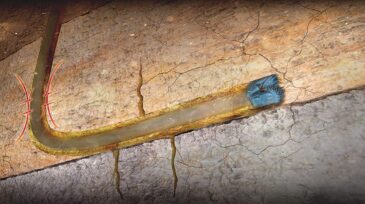
Drilling long horizontal wellbores and completing wells with multistage fracturing are common practices in shale-play development.
-
Making hole has become a more difficult and complex operation as operators move into untapped horizons, especially deepwater and unconventional fields.
-
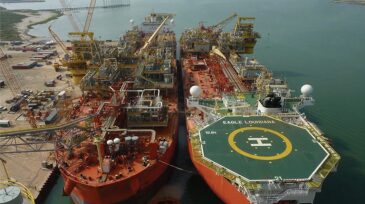
In response to the 2010 Deepwater Horizon incident that claimed the lives of 11 men and led to the worst oil spill in United States history, the offshore industry devised new technologies and methods that would allow for a quicker response in the US Gulf of Mexico.
-
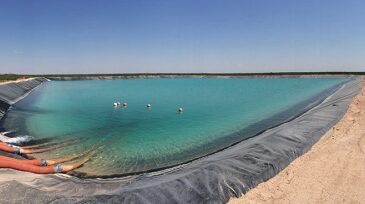
Companies are deploying a variety of technologies to reduce the water needs of hydraulic fracturing. Where are these new facilities with these new technologies, and how will they help operators solve the problem of finding water to use?
-
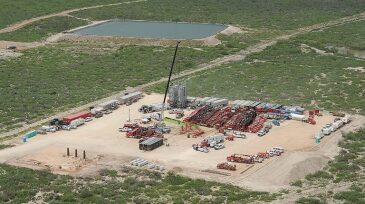
Over the next few years, water treatment technologies are expected to continue to be deployed in the basin, as drought drives aquifer levels to new lows.
-
Hydraulically fracturing and stimulating multiple horizontal wells in sequence has been rapidly adopted by operators because of the potential for production without introducing unwanted risks.
-
I think it is safe to say that the engineers and companies involved, in either building or using sand-control systems, have made significant strides and have added critical learnings to our industry.
-
Although multiple-zone, downhole sand-control-tool systems have been in use since the early 1990s, these systems have been designed for jobs that require only low pump rates with low pressure differentials.
-
Standalone-sand-screen (SAS) completion, especially in horizontal gas wells with high potential for sand production, typically suffers from premature failure caused by sand erosion resulting from high velocity in the annulus near the heel section.