Completions

This edition highlights three offshore technology papers that address a common industry theme: how targeted engineering solutions can reduce uncertainty, shorten operations, and make technically constrained offshore well activities more executable.

Three papers are highlighted as the primary contributions because of their broad industry relevance. They focus on improving formation particle-size characterization, expanding the application of openhole gravel packs in depleted and compartmentalized reservoirs, and advancing the understanding of capillary pressure in sand production.

This paper aims to establish a set of best practices for generating particle-size-distribution data from core samples.
-
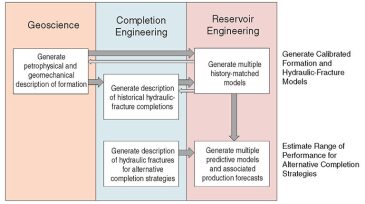
 This paper describes a modeling technique by which hydraulic fractures are represented as part of the well model rather than as any form of refinement in the simulation grid.
 -
Many problems that result in BOP downtime could be prevented if only drilling contractors knew which parts of the subsea system to replace and when. BOP monitoring systems have been developed to increase reliability by enabling preventive maintenance.
-
This paper presents a pragmatic integrated work flow used to optimize development and guide critical development decisions in the Black Hawk field.
-
This paper discusses fracture stimulation in the first joint-venture shale-gas project with foreign companies in China.
-
Used extensively by the food, chemical, and pharmaceutical industries, the mechanical-vapor-recompression (MVR) process is viewed as a reliable method for recovering demineralized water from concentrated brines. This paper reports on performance of an advanced MVR system in north-central Texas.
-
A growing chorus of suppliers, researchers, and service companies is persuading US operators to re-examine their use of slickwater in shale plays and consider displacing it with carbon dioxide and nitrogen.
-
Pumping fracturing jobs is an equipment killer. The job requires running enormous quantities of water and sand through a pump, which is an abrasive mix that damages pumps in ways that cannot be fixed. Adding to the pressure is the trend toward clustering wells on pad sites that extend run time.
-
This work describes the positive results experienced when a self-diverting acid system based on a viscoelastic-surfactant (VES) technology was introduced for carbonate-reservoir stimulation offshore Brazil.
-
This paper describes a matrix-acidizing campaign executed successfully in the Gulf of Cambay on the west coast of India.
-
Matrix stimulation encompasses pumping processes used to improve the connection between the wellbore and the reservoir. They are effective in a wide range of lithologies and have been successful in most types of completions: cased and openhole, horizontal and vertical, simple and complex, injectors