Completions
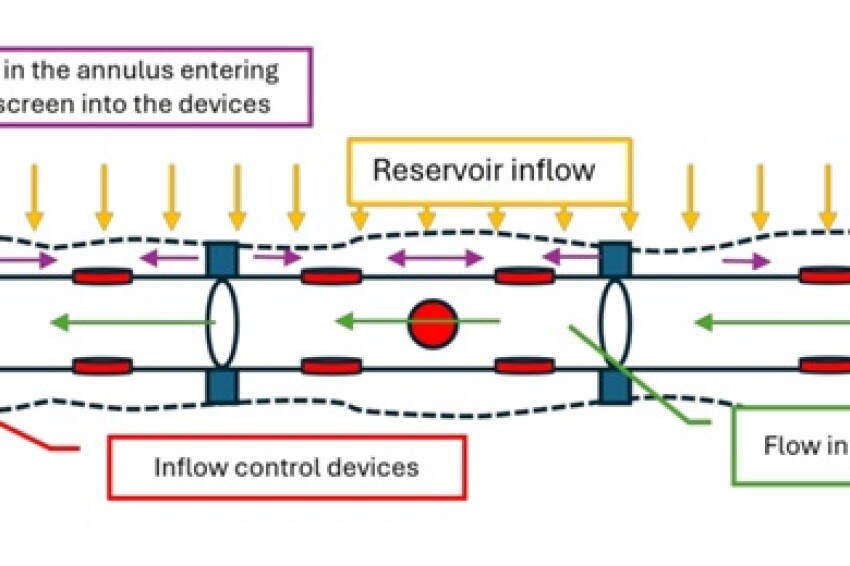
This paper compares various drainage strategies and well completion configurations on the installation of inflow control technology by considering energy efficiency.

A new tubing-conveyed tool combines wellbore cleanout with multi-tracer deployment for production diagnostics and reservoir monitoring.

Technology developers expect the tight-oil industry to give lightweight proppants another look after the Permian Basin’s biggest operator becomes an adopter.
-
 Highlights of what the US oil and gas chief said to SPE members at the recent Hydraulic Fracturing Technology Conference.
 -
The perspectives gained from the Hydraulic Fracturing Technology Conference offer a glimpse of life after COVID-19, which looks better and different.
-
Carbonate reservoirs require effective acid stimulation to improve well productivity. For long horizontal wells, a complicating factor has previously been the difficulty of controlling acid placement along the reservoir section. The Smart Liner concept uses a number of small holes spaced in such a way so as to distribute the acid evenly along the reservoir interval.
-
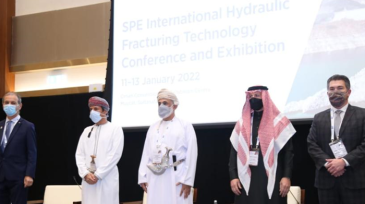
The second edition of the SPE International Hydraulic Fracturing Technology Conference and Exhibition opened in Muscat, Oman, yesterday with more than 395 oil and gas professionals from 90 companies and 28 countries.
-
Even though total produced volumes are projected to hit new record highs in the coming years, treated water is expected to be comparatively lower than in the past, despite water disposal practices increasing oilfield seismic activity, with earthquakes nearly doubling in West Texas alone in 2021.
-
It appears to be possible to sense how fractures change during production using ultrasensitive fiber-optic strain measurements.
-
A rigless chemical frac-hit remediation process was designed to address the damage mechanisms of capillary phase trapping, reduced hydrocarbon relative permeability, paraffin deposition, and minor scale deposition.
-
The disruptive nature of unconventional reservoirs has spurred the need for new ideas. But that doesn’t always mean that we need to toss out the traditional methods that got us here. Such might be the case for the recent developments unfolding around the diagnostic fracture injection test (DFIT).
-
The authors describe a study in which leakage-rate modeling was performed to identify and evaluate the associated risks for designing a remedial action plan to safeguard a CO2 storage site.
-
When it comes to produced water from US shale plays, it’s either recycle and reuse or throw it away—and both are easier said than done.