Completions

Industry experts at URTeC assessed more than a decade of unconventional growth while discussing where productivity gains will come from next.

Chevron and Halliburton describe how they built and deployed the fully autonomous closed-loop fracturing system that enables subsurface-driven optimization.

Weatherford CEO Girish K. Saligram said the acquisition will bolster Weatherford’s completions offerings and unconventional reservoir capabilities.
-
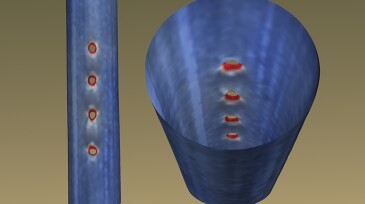
 SponsoredWellbore deformation can occur at any stage in the life of a well. Whether a result of changes in temperature, pressure or tectonic forces, wellbore deformation may result in serious downhole issues such as restricted access for interventions or the loss of well integrity that may ultimately lead to premature well abandonment and significantly reduced economic perform…
 -
SponsoredExtended reach wells provide access to otherwise inaccessible areas, improve production and reduce footprint. Advancements in completion technology allow producers to eliminate coiled tubing, perforation guns and milling out operations to lower project risks, costs, and environmental impact.
-
Incremental gains are not always celebrated, but as two of the biggest oil producers in the US show, they nonetheless can net unrealized savings and new efficiencies.
-
The combined company will have a strengthened position in the Permian Basin, and plans to operate 17 hydraulic fracturing fleets in the region.
-
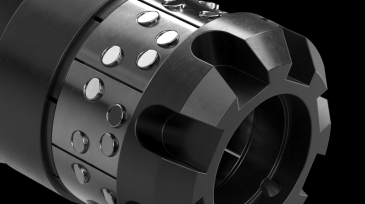
SponsoredAmong the industry’s shortest and most advanced dissolvable frac plugs, Stinger delivered big to this Howard County, TX operator with time and cost savings.
-
SponsoredAmong the industry’s shortest and most advanced dissolvable frac plugs, Stinger delivered big to this Howard County, TX operator with time and cost savings.
-
A 2-year study of a formation used for saltwater disposal in the Bakken may hold promise of decreasing the pressurization of the formation and increasing the reuse of the briny produced water.
-
A wellbore repair tool was successfully deployed to rectify collapsed tubing in a remote well off the coast of Papua New Guinea.
-
The implementation of fishbone stimulation helped to more than double estimated well productivity and tripled the production rate in a tight carbonate reservoir well compared with conventional stimulation during initial testing.
-
When fracturing, simply shooting all the perforations at the same spot in the casing can offer increased production at a low cost.