Completions

Three papers are highlighted as the primary contributions because of their broad industry relevance. They focus on improving formation particle-size characterization, expanding the application of openhole gravel packs in depleted and compartmentalized reservoirs, and advancing the understanding of capillary pressure in sand production.

This paper discusses the successful execution of two openhole gravel-pack completions in two Gulf of Mexico fields with depleted reservoirs.

This edition highlights three offshore technology papers that address a common industry theme: how targeted engineering solutions can reduce uncertainty, shorten operations, and make technically constrained offshore well activities more executable.
-
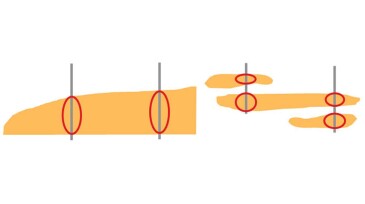
 This paper describes an alternative lower-completion concept for developing Lower Wilcox reservoirs referred to as high-angle multifractured well design.
 -
This paper presents a study conducted on past through-tubing sand-screen installations to understand performance and develop a workflow to improve future installations.
-
The SPE International Hydraulic Fracturing Technology Conference and Exhibition opens with calls to adapt technology while addressing regional realities.
-
Intelligent completions could improve many of the world’s oil and gas wells, but not all are suited to the technology. There is another option.
-
Casing deformation has emerged as a major challenge in China’s unconventional oil and gas fields, prompting the development of new solutions to address the issue.
-
The US supermajor is using one of its lowest-value hydrocarbon products to generate double-digit production increases in its most prolific US asset.
-
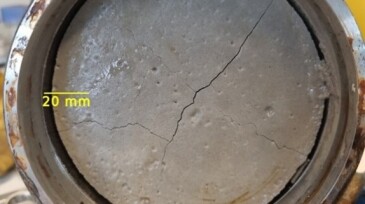
This paper presents the characterization and comparison of a metakaolin-based geopolymer as a candidate treatment for remedial operations in oil and gas wells versus conventional state-of-the-art materials.
-
The collaboration has announced Closed Loop Fracturing, which combines real-time subsurface data with automated surface control.
-
Researchers with the National Energy Technology Laboratory showed that naturally occurring signals in underground fluids can serve as effective indicators of flow patterns between existing wellbores. Understanding these patterns can lead to increased efficiency and safety.
-
The upstream industry has viewed real-time completions as a long-term goal, but the technology is already in use.

![JPT_2025-09_GuestEd1_SS_382853197[4].jpg](https://assets.spe.org/dims4/default/860913d/2147483647/strip/true/crop/850x475+0+46/resize/365x204!/quality/90/?url=http%3A%2F%2Fspe-brightspot.s3.us-east-2.amazonaws.com%2F8a%2F95%2Fe4e82cb54fd597d497a5b1267f8a%2Fjpt-2025-09-guested1-ss-3828531974.jpg)