Completions

This edition highlights three offshore technology papers that address a common industry theme: how targeted engineering solutions can reduce uncertainty, shorten operations, and make technically constrained offshore well activities more executable.

Three papers are highlighted as the primary contributions because of their broad industry relevance. They focus on improving formation particle-size characterization, expanding the application of openhole gravel packs in depleted and compartmentalized reservoirs, and advancing the understanding of capillary pressure in sand production.

This paper aims to establish a set of best practices for generating particle-size-distribution data from core samples.
-
 This case study outlines a methodology to optimize and control hydraulic fracturing parameters by achieving 100% cluster efficiency and overcoming formation leak-off.
 -
This paper presents a specialized workflow that aims to quantify the severity of condensate banking and subsequently optimize reservoir development strategies for a deep formation in the Permian Basin.
-
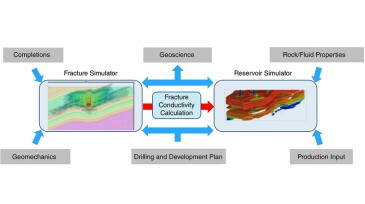
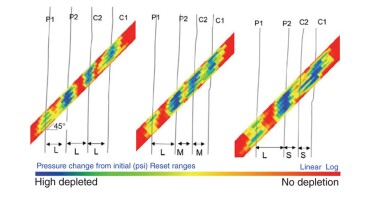
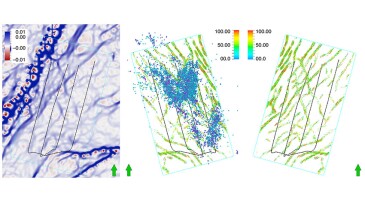
This paper describes numerical modeling studies of fracture-driven interactions using a coupled hydraulic-fracturing-propagation, reservoir-flow, and geomechanics tool.
-
The papers highlighted in this section demonstrate the merging of the theoretical and empirical to solve practical problems, addressing topics such as casing deformation, condensate banking, and mitigation of fracture-driven interactions.
-
A proposed integrated workflow aims to guide prediction and mitigating solutions to reduce casing-deformation risks and improve stimulation efficiency.
-
We’re thrilled to announce the launch of the 2025 SPE/JPT Drilling and Hydraulic Fracturing Technology Review. This exclusive, official publication will be distributed at three major SPE industry events.
-
SponsoredTAQA's PulseEight Secure and SwellStack solutions avoid costly workovers and deferred production by riglessly retrofitting an alternative to failed subsurface safety valves.
-
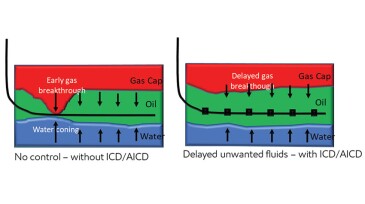
This paper provides insight into designing advanced well completions offshore West Africa with autonomous inflow control devices that enable maximizing the producing life of the wells under various challenging reservoir conditions.
-
This paper describes an optimized multizone single-trip gravel-pack system developed and implemented successfully in Brunei.
-
This paper describes the qualification of a multilayer, open-cell matrix polymer system for the first horizontal deployment in an offshore gas well.