Completions

Three papers are highlighted as the primary contributions because of their broad industry relevance. They focus on improving formation particle-size characterization, expanding the application of openhole gravel packs in depleted and compartmentalized reservoirs, and advancing the understanding of capillary pressure in sand production.

This paper aims to establish a set of best practices for generating particle-size-distribution data from core samples.

This paper discusses the successful execution of two openhole gravel-pack completions in two Gulf of Mexico fields with depleted reservoirs.
-
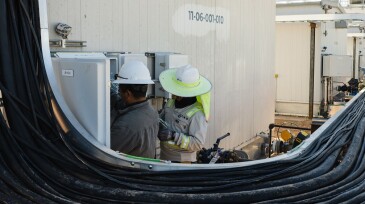
 Fracturing companies can’t connect to the electric grid fast enough as they seek to reduce emissions, save costs.
 -
This paper defines conditions for optimized well-diagnostics investigation and describes a rigless solutions for common well-barrier failures and lessons learned from operator field trials.
-
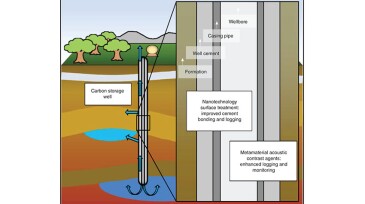
Typically, oil and gas producing wells are abandoned toward the end of their life cycles with reservoir pressures depleted compared with the virgin pressures. Carbon capture and storage projects, however, present different operating conditions.
-
The authors of this paper describe a suite of technologies that enables enhanced well robustness and performance modeling and monitoring of carbon storage facilities.
-
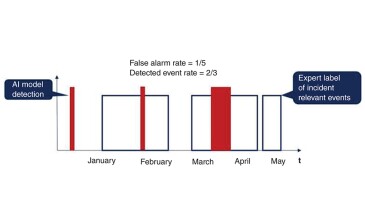
This paper presents the proof of concept of artificial-intelligence-based well-integrity monitoring for gas lift, natural flow, and water-injector wells.
-
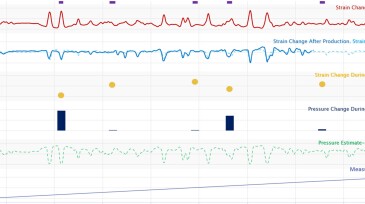
The authors of this paper describe a project in which Raleigh frequency-shift distributed strain sensing monitored during production in a far-field observation well was translated to an estimated pressure profile.
-
SponsoredWith more surface facilities and infrastructure in oil and gas fields, well casing integrity is becoming an even bigger challenge. This article sheds light on the optimum way to deal with the increasing casing integrity challenges in the Middle East through field monitoring and time-lapse casing-integrity and corrosion-inspection logging.
-
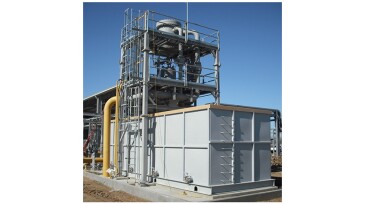
This paper outlines issues to be resolved during facility design and provides guidelines, calculations, and examples for sand-handling steps to be implemented after separation.
-
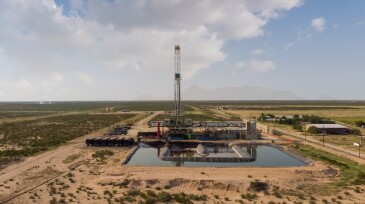
Permian Basin oil wells produce a lot of water. Much of it is injected into disposal zones above and below the basin’s primary oil- and gas-producing zone. When water is injected into these disposal zones, the pressure increases, mainly because no fluid is concurrently removed. Is this increase in pressure a concern? The data would suggest yes.
-
The authors of this paper describe a model-driven work flow developed for hydraulic fracturing design and execution that could be a resource for other shale plays with similar challenges worldwide.