Completions

Three papers are highlighted as the primary contributions because of their broad industry relevance. They focus on improving formation particle-size characterization, expanding the application of openhole gravel packs in depleted and compartmentalized reservoirs, and advancing the understanding of capillary pressure in sand production.

This paper aims to establish a set of best practices for generating particle-size-distribution data from core samples.

This paper discusses the successful execution of two openhole gravel-pack completions in two Gulf of Mexico fields with depleted reservoirs.
-
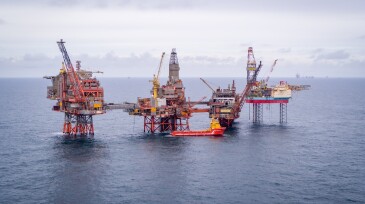
 This paper details a gravel packing operation in the Martin Linge field in the North Sea that marks the highest density carrier fluid openhole gravel pack completed successfully worldwide, setting a new standard for well completions in challenging high-pressure environments.
 -
The tie between US crude output and key indicators such as rig counts and the number of new wells has significantly weakened.
-
This paper provides insights into the technical and economic viability of repurposing oil and gas wells for geothermal energy production for direct heating.
-
High-pressure/high-temperature (HP/HT) resources continue to be a focus of efforts to apply new technologies that maximize productivity while addressing concerns related to capital expenditure, operating expenses, and high drilling costs. These cost-effective technologies will only grow in importance in exploiting HP/HT and ultra-HP/HT fields.
-
The Research Council of Norway’s $118,000 grant will support development of longer fishbone laterals to raise production while lowering carbon footprints.
-
New studies examine whether two innovative well designs should have a bigger role to play in the race to get more value out of tight rock reservoirs.
-
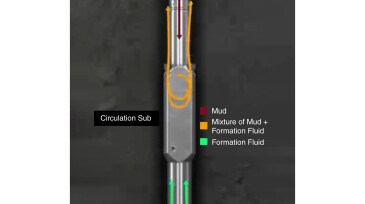
This paper addresses the challenges related to well control and the successful implementation of deep-transient-test operations in an offshore well in Southeast Asia carried out with the help of a dynamic well-control-simulation platform.
-
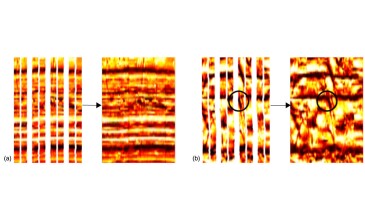
The authors of this paper propose an artificial-intelligence-assisted work flow that uses machine-learning techniques to identify sweet spots in carbonate reservoirs.
-
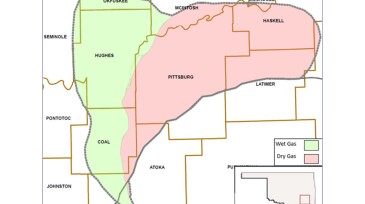
This paper describes an effort to use multiple technologies to better understand an Arkoma Basin reservoir and the interdisciplinary relationship between the reservoir’s subsurface hazards and a stimulation treatment.
-
The main objective of this paper is to investigate the relationship between strain change and pressure change under various fractured reservoir conditions to better estimate conductive fractures and pressure profiles.