Completions

This paper aims to establish a set of best practices for generating particle-size-distribution data from core samples.

This paper discusses the successful execution of two openhole gravel-pack completions in two Gulf of Mexico fields with depleted reservoirs.

This edition highlights three offshore technology papers that address a common industry theme: how targeted engineering solutions can reduce uncertainty, shorten operations, and make technically constrained offshore well activities more executable.
-
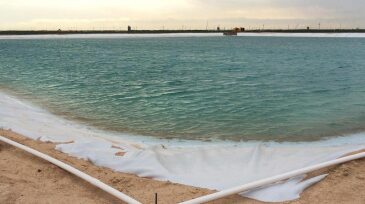
 As oil prices recover from the low point of the downturn, operators in the Permian and the Bakken are tackling water management issues.
 -
This work is a study of collapse pressure of perforated pipes to evaluate the effect of lateral perforations on the radial resistance of pipes under external pressure.
-
Increasing lateral lengths, stage counts, and proppant intensity levels are contributing to a bullish outlook on frac sand demand.
-
This paper presents a critical review of the recent literature to determine the status of research and development and field application of nanotechnology in the oil field.
-
Development of a new polymer composite that degrades via hydrolysis in hot water or brine holds potential for use in structural applications for intervention-less downhole tools.
-
A North Sea field development included installation of long 4½-in. completion liners in the horizontal reservoir sections of each well. To minimize overall risk, the operator planned to use managed-pressure drilling (MPD).
-
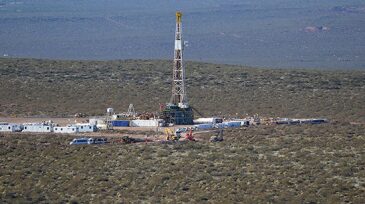
Shale explorers in Argentina are reporting that improving performance and activity is set to rise this year to boost the country’s gas production.
-
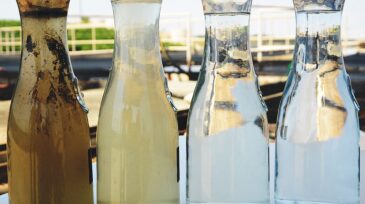
OriginClear agreed to a sales licensing deal for use of its Electro Water Separation technology at a Sinopec-operated shale gas site.
-
An advisor at Schlumberger discusses the company’s work in examining the effect of perforations on hydraulic fracture initiation.
-
Optimizing laterals by integrating data from many sources to address reservoir variability and structural challenges can increase shale well productivity.