Completions

Three papers are highlighted as the primary contributions because of their broad industry relevance. They focus on improving formation particle-size characterization, expanding the application of openhole gravel packs in depleted and compartmentalized reservoirs, and advancing the understanding of capillary pressure in sand production.

This paper aims to establish a set of best practices for generating particle-size-distribution data from core samples.

This paper discusses the successful execution of two openhole gravel-pack completions in two Gulf of Mexico fields with depleted reservoirs.
-
 Weather conditions aging offshore facilities presented challenges during a monsoon in the South China Sea.
 -
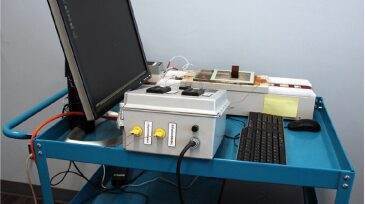
This work will present an object-oriented tracking system that allows CT operators to monitor defects as they evolve over time.
-
Are we really in an industry that is so mature that it is devoid of new thoughts and incapable of generating new concepts to meet the challenges that we face?
-
Matrix stimulation encompasses pumping processes used to improve the connection between the wellbore and the reservoir. They are effective in a wide range of lithologies and have been successful in most types of completions: cased and openhole, horizontal and vertical, simple and complex, injectors
-
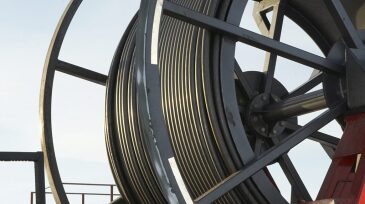
While increasing coiled-tubing (CT) diameter remains a theoretical option to improve reach, doing so creates logistical challenges.
-
Hydraulic fracturing solutions use a gelling agent known as guar gum to transport proppant. Flowback water can have guar gum concentrations has high as 1% by volume creating treatment challenges prior to reuse or disposal.
-
This paper discusses the keys to the successful delivery and well productivity of the first seven of 40 planned wells of the BP's PSVM development.
-
For those in shale exploration, “fracability” is a real word, a critical property, and a point of contention.
-
With inconsistent inlet water quality being the rule rather than the exception, sizing and operational considerations of the treatment system components must vary accordingly to make the most economic sense.
-
Recently, a new structure located in northwestern Kuwait was drilled and tested with a deep-drilling rig.