Completions

This edition highlights three offshore technology papers that address a common industry theme: how targeted engineering solutions can reduce uncertainty, shorten operations, and make technically constrained offshore well activities more executable.

Three papers are highlighted as the primary contributions because of their broad industry relevance. They focus on improving formation particle-size characterization, expanding the application of openhole gravel packs in depleted and compartmentalized reservoirs, and advancing the understanding of capillary pressure in sand production.

This paper aims to establish a set of best practices for generating particle-size-distribution data from core samples.
-
 Some operators are returning to their North American mature unconventional shale wells to refracture, or restimulate, the rock to accelerate production and enhance ultimate recoveries.
 -
Recently, a new structure located in northwestern Kuwait was drilled and tested with a deep-drilling rig.
-
This paper gives an overview of the latest developments in how advanced finite-element-analysis (FEA) tools are used to verify, optimize, and validate ultra-HP/HT completion and production tools.
-
At the 2014 SPE Hydraulic Fracturing Technology Conference in February, former Texas A&M Department of Petroleum Engineering head Stephen A. Holditch received a well-deserved lifetime achievement recognition, the Legends of Hydraulic Fracturing Award.
-
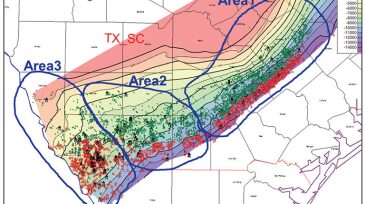
The purpose of this paper is to apply multivariate statistical modeling in conjunction with geographic-information-systems (GIS) pattern-recognition work to the Eagle Ford.
-
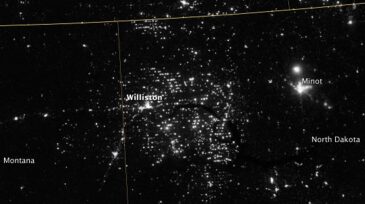
Production from the Bakken and Three Forks formations within the Williston basin is continuing to climb as a result of applied horizontal drilling and hydraulic fracturing.
-
Using large-scale hydraulic-fracturing experiments on tight shale outcrops, three dominant regions controlling stage production were identified.
-
An analysis of thousands of fracturing treatments in major plays in the United States provides insights into how fracture designs have changed over time.
-
Fiber optic pressure and temperature (P/T) sensing technology for multizone fracturing and production monitoring is enabled by a new feed-through (FT) technology that integrates the optical fiber within the multiple elastomer elements of a compact, swellable openhole packer system.
-
The demands for the fresh water used in many hydraulic fracturing operations are placing pressure on water sources in some regions of the United States. Because of the high volumes of water needed for fracturing and competing demands availability of fresh water has decreased and costs have grown.