Completions

This edition highlights three offshore technology papers that address a common industry theme: how targeted engineering solutions can reduce uncertainty, shorten operations, and make technically constrained offshore well activities more executable.

Three papers are highlighted as the primary contributions because of their broad industry relevance. They focus on improving formation particle-size characterization, expanding the application of openhole gravel packs in depleted and compartmentalized reservoirs, and advancing the understanding of capillary pressure in sand production.

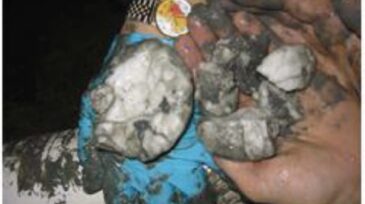
This paper aims to establish a set of best practices for generating particle-size-distribution data from core samples.
-
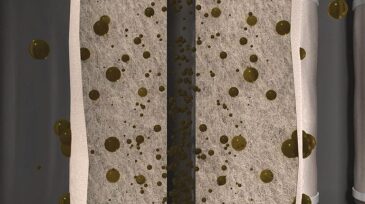
 This is the fifth article in a series covering water management in hydraulic fracturing in unconventional resources. The focus of this article is biological control. Additives to improve fracturing conditions can have negative effects on water treatment.
 -
Statistics on well-integrity incidents are difficult to find in the literature. There are some examples of kick and blowout events, but normally they are scarce and focus on the number of incidents and their root causes.
-
The purpose of this work is to investigate typical fracture and collapse models with respect to accuracies in the input data.
-
Deepwater cementing becomes increasingly challenging as drilling operations move to greater water depths and more-remote locations.
-
Seizing on historic margins in domestic prices, North American oil and gas companies are increasing their efforts to use more natural gas and less diesel fuel to power their field operations.
-
Two large proppant makers have rolled out a new class of ultraheavy proppant built to stand up to the extreme stresses found on the frontiers of deepwater exploration.
-
This is the fourth article of a series covering water management in hydraulic fracturing (HF) in unconventional resources. This article discusses the use of mechanical vapor compression (MVC) as a desalination technology.
-
A growing number of alternatives for treating flowback water enable operators to meet the requirements for discharge or reuse of the water in the fracturing fluid, a scientist said recently.
-
Early in its development, the Cline shale was hyped as the next Eagle Ford or Bakken with more oil and gas than they have combined.
-
Alternative approaches and new deployment strategies are being developed to manage water used for fracturing oil and gas wells.