Data & Analytics

The emerging vision is an industry where engineers focus on judgment, risk assessments, and accountability.

This paper presents the large-scale deployment and operational integration of an advanced, automated rheometer in the Ghawar gas field, one of the world’s most prolific and technically complex hydrocarbon developments.

This study demonstrates the transformative potential of physics-informed neural networks as a hybrid framework for multiphase flow measurement.
-
 The industry’s vast untapped data resources have the potential to change how our industry works—if we can piece it together.
-
This paper presents the processes of identifying production enhancement opportunities, as well as the methodology used to identify underperforming candidates and analyze well-integrity issues, in a brownfield offshore Malaysia.
-
This paper delves into the evolving landscape of drilling automation, emphasizing the imperative for these systems to go beyond novelty and deliver quantifiable financial value.
-
This paper presents a workflow that combines probabilistic modeling and deep-learning models trained on an ensemble of physics models to improve scalability and reliability for shale and tight-reservoir forecasting.
-
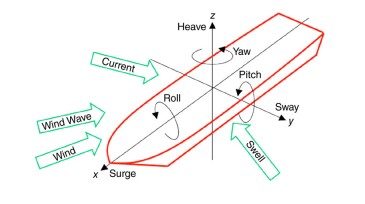
This paper describes a new application that leverages advanced machine-learning techniques in conjunction with metocean forecasts to predict vessel motions and thruster loads.
-
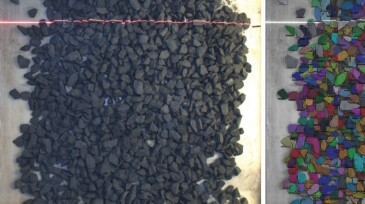
This paper proposes a holistic, automatic, and real-time characterization of cuttings/cavings, including their volume, size distribution, and shape/morphology, while integrating 3D data with high-resolution images to pursue this objective for use in the real-time assessment of hole cleaning sufficiency and wellbore stability and, consequently, for the prediction, prev…
-
Collaboration and technology will help the industry meet its toughest challenges, experts said during the opening session at ATCE.
-
In this exclusive Q&A, Giovanni Cristofoli, senior vice president of bp Solutions, shares insights into how his team is redefining operational strategies and fostering agility to bridge competitive gaps and enhance efficiency. Highlights include the integration of digital tools, data science, and a unified approach to tackling complex problems.
-
Accuracy, complexity, costs, and skills availability may make it difficult to get the most out of digital twins and even potentially misrepresent or miss actual changes in the status of systems or facilities.
-
The new contract extends a decadelong relationship and expands the use of AI and digital twins.