Data & Analytics

The emerging vision is an industry where engineers focus on judgment, risk assessments, and accountability.

Novel lift systems, AI-driven automation, and real-time engineering models are helping operators extract more value from mature wells.

This case study from Tomax outlines the use of artificial intelligence to analyze high-fidelity data of the full drilling process.
-
 The agreement will use IBM’s hybrid-cloud technology and Red Hat’s OpenShift platform to expand access to Schlumberger’s Delfi exploration and production software suite.
-
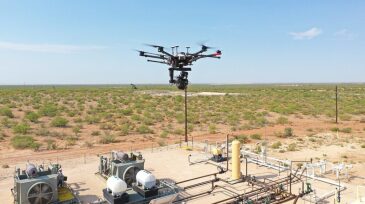
After 2 years of testing, Shell is going all in on using high-flying technology to catch methane leaks to reduce its overall emissions to less than 1%.
-
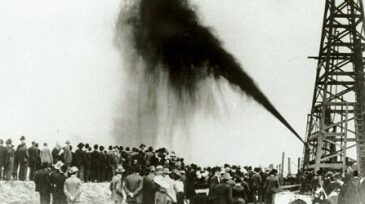
The oil and gas industry has a new Spindletop, and it’s nowhere near being capped. In this data boom, the industry is up to its neck in petabytes of data, generating thousands of terabytes per day, with the volumes doubling every 12–18 months, and using less than 5% of it for decision making.
-
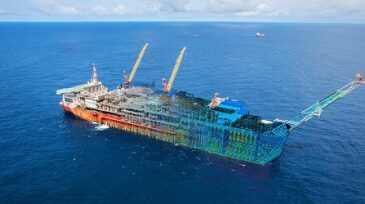
The engineering simulation firm announced the successful deployment of a complete structural digital twin for Shell’s Bonga floating production, storage, and offloading vessel 120 km southwest of the Niger Delta in Nigeria.
-
Advanced machine-learning methods combined with aspects of game theory are helping operators understand the drivers of water production and improve forecasting and economics in unconventional basins.
-
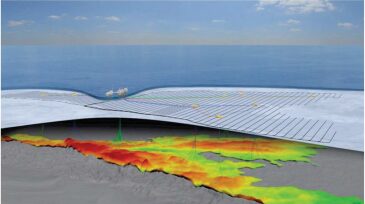
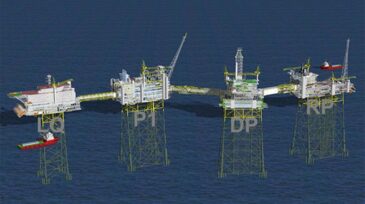
Before the giant Johan Sverdrup field had produced even one barrel of oil, operator Equinor and its license partners set a recovery ambition of greater than 70% for the field.
-
This paper presents the basic concepts and architecture of the Eni Reservoir Electromagnetic Mapping borehole electromagnetic mapping system that integrates borehole EM methodology with surface EM methods to provide real-time mapping of reservoir-fluid distribution during production or injection.
-
Decline-curve analysis is one of the more widely used forms of data analysis that evaluates well behavior and forecasts production and reserves. This paper presents technologies that apply DCA methods to wells in an unbiased, systematic, intelligent, and automated fashion.
-
The complete paper describes the development of the “digital field worker” at Johan Sverdrup, an initiative that has changed the approach toward not only construction and completion but also operations.
-
The complete paper discusses optimization of a development plan involving low-salinity water injection.