Data & Analytics

Switching from continuous circulation to cyclic huff-‘n’-puff operation in enhanced geothermal systems can significantly delay thermal breakthrough, sustain higher production temperatures, and improve long-term economic performance.

The two companies say they plan to work together to use agentic AI to increase the capabilities of technical experts.

This article is the first in a Q&A series from the SPE Methane Emissions Management Technical Section (MEMTS) on methane intelligence and how oil and gas teams translate emissions data into credible decisions and measurable reductions.
-
 The Independent Project Analysis recently reached out to its clients to understand why digitalization tools are so burdensome for projects organizations to implement.
 -
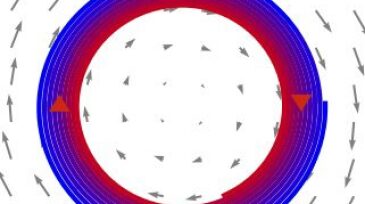
Hamiltonian neural networks draw inspiration from Hamiltonian mechanics, a branch of physics concerned with conservation laws and invariances. By construction, these models learn conservation laws from data, revealing major advantages over regular neural networks on a variety of physics problems.
-
Schlumberger introduced the GAIA digital exploration platform, which it says enables exploration teams to rapidly discover and access basin-scale data and manage their exploration opportunities.
-
Researchers at the University of Massachusetts, Amherst, performed a life-cycle assessment for training several common large AI models. They found that the process can emit more than 626,000 lbm of carbon dioxide equivalent—nearly five times the lifetime emissions of the average American car.
-
DSDE recently spoke with Bill Vass, vice president of engineering for Amazon Web Services, about his observations on the oil and gas industry’s digital efforts and Amazon’s aggressive growth in the business.
-
Random Forest and Neural Network are the two widely used machine-learning algorithms. What is the difference between the two approaches? When should one use Neural Network or Random Forest?
-
The criticality of above-water riser hull piping requires frequent inspections. Traditional manual inspection methods present safety and efficiency concerns, but work is being done to see if robotic technologies—such as drones and crawlers—can do the job as good as, or even better than, humans.
-
As drones become a more significant part of energy projects, the guide outlines the steps operators should take in assessing their capabilities to run a drone program and the elements such programs should consider, including safety and regulatory concerns.
-
As the global oil and gas industry grasps the benefits that digitalization, automation, machine learning, and artificial intelligence can bring to production and profitability, its relatively immature cyber systems are making it an attractive soft target for hackers.
-
Malaysia’s Petronas, Shell Malaysia, and Thailand’s PTTEP are now in the midst of full-scale digital adoption. The companies are beginning to see results, but none is counting on a “big bang” in development of the technology soon.