Data & Analytics

Working with Dell Technologies and NVIDIA, the French supermajor is targeting improved seismic processing and artificial intelligence applications.

A discussion at the inaugural executive breakfast convened by the SPE Data Science and Engineering Analytics Technical Section, held alongside CERAWeek by S&P Global and powered by Black & Veatch, tackled the challenge of value creation from artificial intelligence in the energy industry.

AI‑driven data center growth is straining US power grids and accelerating interest in enhanced geothermal systems as a scalable, low‑carbon solution.
-
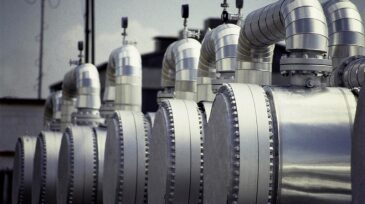
 High-performance computing is an important piece of the puzzle for operators looking to integrate field models with surface facilities. Next-generation processors and accelerators should help build the systems needed to meet industry's growing demands, but the tools may be reaching their limits.
 -
The TRITON/TRISIS/HatMan malware incident proved that the worlds of process safety and industrial control systems should be looked at holistically, not just from the standpoint of potential cyberthreats.
-
The need to understand the future trends of the oil industry has never been greater than it is today.
-
In this study, the authors investigated a fully data-driven approach using artificial neural networks (ANNs) for real-time virtual flowmetering and back-allocation in production wells.
-
The authors detail the development of a technique based on surface-to-borehole controlled-source electromagnetics (CSEM), which exploits the large contrast in resistivity between injected water and oil to derive 3D resistivity distributions, proportional to saturations, in the reservoir.
-
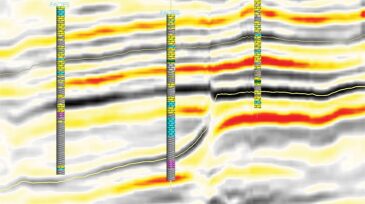
This paper discusses a project with the objective of leveraging prestack and poststack seismic data in order to reconstruct 3D images of thin, discontinuous, oil-filled packstone pay facies of the Upper and Lower Wolfcamp formation.
-
In this paper, the authors describe a project to design, field trial, and qualify an alternative solution for real-time monitoring of the oil rim in carbonate reservoirs that overcomes these disadvantages.
-
This industry is one often considered reactive and overly tradition-bound. These new technologies, however—and, more importantly, the drive of these researchers to harness their capabilities—prove that petroleum engineers remain at the forefront of innovation and discovery.
-
While the visual element is key, the core strategic component of data visualization is the ability to unlock the story in the data.
-
Instinctively, we feel that greater accuracy is better and all else should be subjected to this overriding goal. This is not so. While there are a few tasks for which a change in the second decimal place in accuracy might actually matter, for most tasks, this improvement will be irrelevant.