Data & Analytics

Working with Dell Technologies and NVIDIA, the French supermajor is targeting improved seismic processing and artificial intelligence applications.

A discussion at the inaugural executive breakfast convened by the SPE Data Science and Engineering Analytics Technical Section, held alongside CERAWeek by S&P Global and powered by Black & Veatch, tackled the challenge of value creation from artificial intelligence in the energy industry.

AI‑driven data center growth is straining US power grids and accelerating interest in enhanced geothermal systems as a scalable, low‑carbon solution.
-
 BHGE is developing an analytics and machine-learning approach that offers descriptive and predictive insights on frac hits, with the aim of eventually offering a real-time monitoring capability to be deployed during frac jobs.
 -
The execution of process automation projects depends on the completion of tasks that are not necessarily related to automation, hampering project development timelines. How do automation solutions, such as digital twins, help to overcome these challenges?
-
The international major has been playing with intelligent programs for years, but this new deal shows that it is now ready to scale those efforts up to cover hundreds of thousands of pieces of equipment.
-
The 5-year-old software startup is getting noticed by the oil and gas industry for its ability to accelerate analytics projects by taking care of all the tedious work involved with data wrangling.
-
“Greedy pursuit” in the realm of algorithms is a good thing. Saudi Aramco studied such algorithms to produce images simulating the flow inside a pipe’s cross section, possibly reducing the need for separator-based multiphase flowmeters.
-
Well-placement optimization is one of the more challenging problems in the oil and gas industry. Although several optimization methods have been proposed, the most-used approach remains that of manual optimization by reservoir engineers.
-
This paper proposes a new method of economic prediction on the basis of expert library and oilfield databases. The method takes into account geological factors and the effect of production factors on the economic prediction.
-
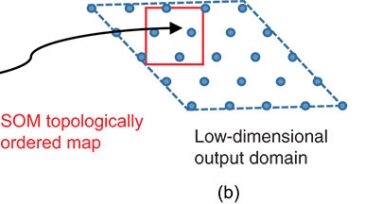
A new geostatistics modeling methodology that connects geostatistics and machine-learning methodologies, uses nonlinear topological mapping to reduce the original high-dimensional data space, and uses unsupervised-learning algorithms to bypass problems with supervised-learning algorithms.
-
This paper demonstrates the viability of a production-data-classification approach adapted from real-time face detection for identifying restimulation candidates.
-
BP has invested more than $100 million into nine different startup companies in the past 2 years—but only one of them wants to turn your brain into a piece of its software.