Data & Analytics
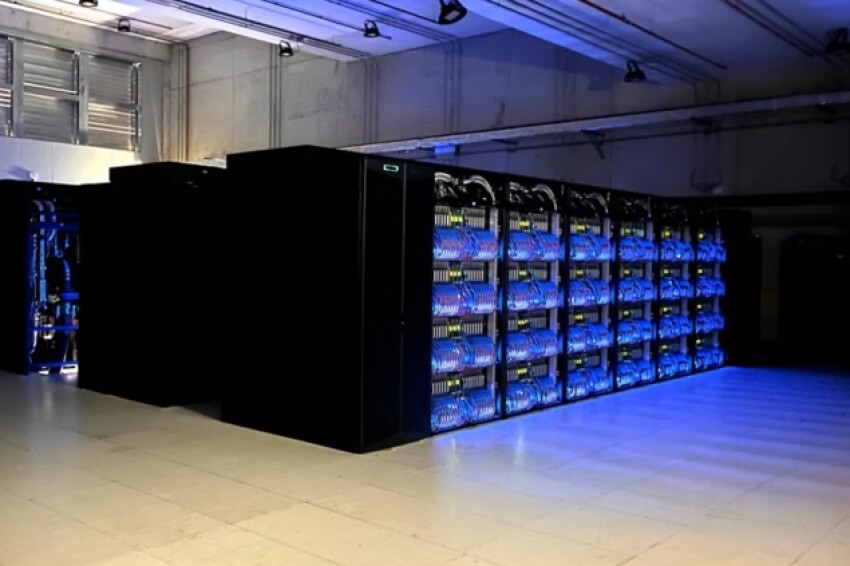
With the latest addition, the Italian major’s computational capacity passes the exaflop threshold, making the firm the world’s leading company by computing power in the new TOP500 global ranking.

This work describes a study in which distributed data parallel training, paired with a node-local caching pipeline, enabled efficient multigraphics-processing-unit scaling for a CO₂-storage graph-neural-network surrogate while maintaining generalization.

This paper presents a novel reservoir engineering/reservoir simulation approach—a data-driven interwell-connectivity model augmented as a digital twin—to predict reservoir dynamics and optimize operations in the Changqing oil field of China.
-
 As SPE members deal with challenging and uncertain times, they are reminded that there are a number of programs available to provide support and key resources. Read more to see which ones are useful to you and your career.
 -
“Dark data” may be a relatively unknown term for many, even though all contribute to its growing presence. It represents data that is accumulated continually by the interconnected systems used every day. A recent survey estimated that an average of 55% of accumulated data is dark and unexplored.
-
An estimate says data centers, including edge sites, will soon use four times the energy all data centers used in 2018. Can it be true?
-
Support vector machines are powerful for solving regression and classification problems. You should have this approach in your machine-learning arsenal, and this article provides all the mathematics you need to know. It's not as hard you might think.
-
When the field emerged at the end of the 20th century, it was hoped that computers would be able to operate on their own, with human-like abilities—a capability known as generalized AI.
-
As deep learning matures and moves from the hype peak to its trough of disillusionment, it is becoming clear that it is missing some fundamental components.
-
Organizations interested in realizing the benefits of having data at the center of their firm will need to define numerous specific work scopes for the conversion of unstructured to structured data.
-
Edge—or, in-field, device-level—computing is being driven by the need for data from individual wells to be analyzed and processed at the wellsite instead of in data centers for early and accurate decision making.
-
If design A yields the same 90-day production at 10% lower cost in a series of wells than design B wells, is design A the better one? Using pressure-based fracture measurements, the separability of variables between two completion designs can be evaluated.
-
For the upstream industry, where improvement in efficiency or production can drive significant financial results, there is no question that the size of the digital prize is huge. So are the challenges.