Data & Analytics
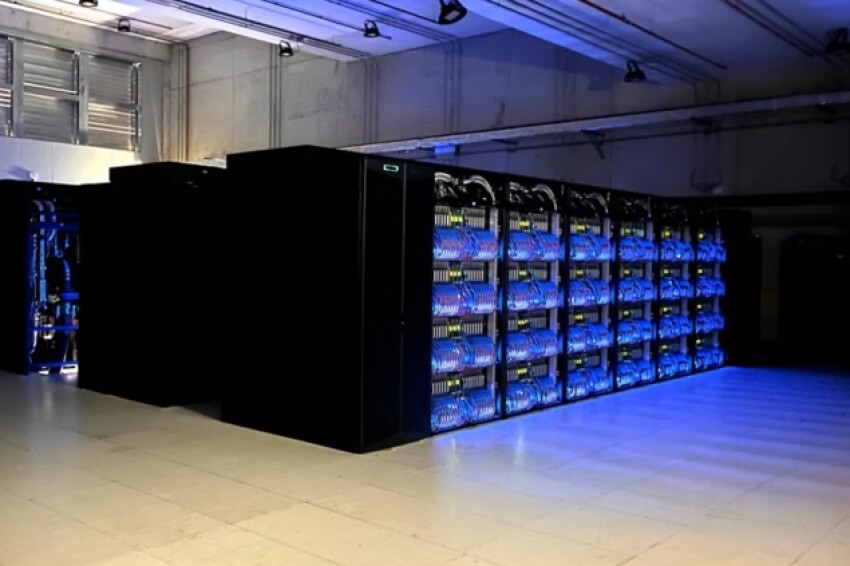
With the latest addition, the Italian major’s computational capacity passes the exaflop threshold, making the firm the world’s leading company by computing power in the new TOP500 global ranking.

This case study describes how edge computing and industrial internet of things platforms were deployed to automate and optimize production operations across four distinct basins.

This work describes a study in which distributed data parallel training, paired with a node-local caching pipeline, enabled efficient multigraphics-processing-unit scaling for a CO₂-storage graph-neural-network surrogate while maintaining generalization.
-
 This paper presents a comprehensive technical review of applications of distributed acoustic sensing.
 -
The authors of this paper describe a technology built on a causation-based artificial intelligence framework designed to forewarn complex, hard-to-detect state changes in chemical, biological, and geological systems.
-
Understanding the subsurface is crucial to the success of carbon capture and storage, and digital solutions are essential for an accurate analysis of the subsurface being considered.
-
Health, safety, and environment operations can be greatly enhanced by using artificial intelligence (AI) techniques on HSE data. One important aspect inherent in this process is the need to establish trust in the AI system among the users.
-
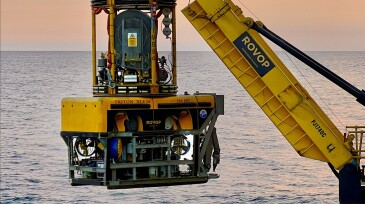
The 5-year contract with global ROV equipment and services provider ROVOP supports Energean’s field development within the wider Katlan area adjacent to Israel’s Karish gas field.
-
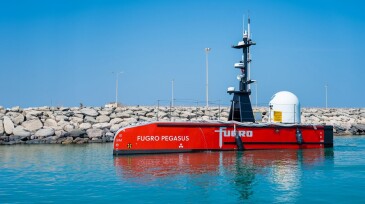
The site survey and inspection of an offshore gas platform in UAE waters was executed entirely from an onshore remote operations center without sending personnel offshore.
-
With a rapid transition toward renewable energy, the energy sector has an increased reliance on technology. This makes it particularly vulnerable with regard to cybersecurity.
-
Registration is open for the SPE Europe Energy GeoHackathon, which will be held in October and November. It will be preceded by 4-week online bootcamp sessions on data science and geothermal energy, which will begin on 2 October.
-
Decades of experience injecting fluids into the ground has revealed a fundamental truth: No two injection sites are the same. A thorough understanding of site-specific conditions is essential to ensure safe and secure long-term subsurface disposal of carbon dioxide.
-
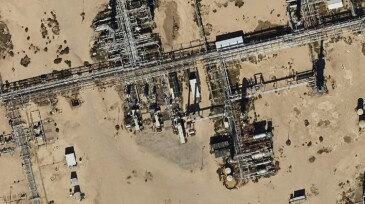
Advanced aerial imagery—be it collected from drone, satellite, or fixed-wing aircraft—is one of the best options available for securing the critical information needed to run things smoother in the oil field.