Data & Analytics
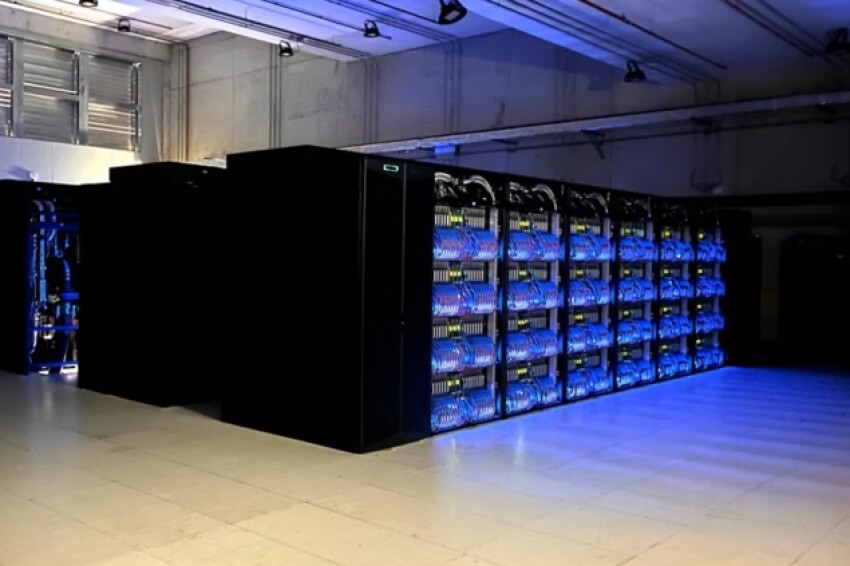
With the latest addition, the Italian major’s computational capacity passes the exaflop threshold, making the firm the world’s leading company by computing power in the new TOP500 global ranking.

This work describes a study in which distributed data parallel training, paired with a node-local caching pipeline, enabled efficient multigraphics-processing-unit scaling for a CO₂-storage graph-neural-network surrogate while maintaining generalization.

This paper presents a novel reservoir engineering/reservoir simulation approach—a data-driven interwell-connectivity model augmented as a digital twin—to predict reservoir dynamics and optimize operations in the Changqing oil field of China.
-
 Researchers with the Energy & Environmental Research Center highlight the key use cases ChatGPT holds today for petrotechnicals.
 -
A study from the International Association of Oil and Gas Producers shows the value of eye-tracking in well control operations.
-
The company’s edge software allowed the remotely operated vehicle to operate autonomously without being tethered to a surface ship.
-
The model is an industry standard template for operators to maintain land survey data, mainly acquired for the oil and gas industry.
-
ChatGPT and its derivative artificial intelligence chatbots are fulfilling the needs and satisfying the curiosity of novices and more experienced AI users. Have you gotten your feet wet or dove right in?
-
This paper compiles recommendations from a broad range of sources into a single document to aid future intelligent-completion installations and operations.
-
For organizations that do it well, data management provides a competitive edge in an increasingly digital oil field. But teams all too often are so busy managing all the moving parts of data management that they take their eye off of “the prize”—the payoff after you have put everything into place to sustain successful data management.
-
A high-resolution acoustic downhole evaluation system nabs top award for 2023.
-
This paper details experiences gained while developing a novel technology-driven approach to risk assessment methodologies such as process hazard analysis, hazard identification, and hazard operability in oil and gas.
-
This article presents a new data-driven analysis to locate low-frequency seismic sources, referred to as near-infrasound or infrasound sources. Combining these infrasound signals with microseismicity signals allows for better characterization and monitoring of the stimulated reservoir volume.