Data & Analytics
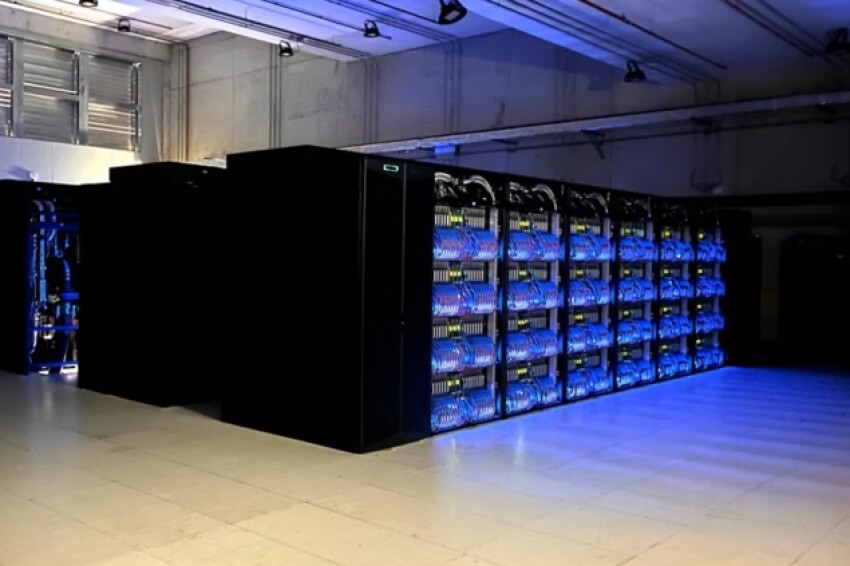
With the latest addition, the Italian major’s computational capacity passes the exaflop threshold, making the firm the world’s leading company by computing power in the new TOP500 global ranking.

This work describes a study in which distributed data parallel training, paired with a node-local caching pipeline, enabled efficient multigraphics-processing-unit scaling for a CO₂-storage graph-neural-network surrogate while maintaining generalization.

This paper presents a novel reservoir engineering/reservoir simulation approach—a data-driven interwell-connectivity model augmented as a digital twin—to predict reservoir dynamics and optimize operations in the Changqing oil field of China.
-
 Deloitte discusses the “great compression” of the oil and gas industry in which companies’ room to maneuver is restricted. How can the industry avoid a talent gap and stop an organizational challenge from becoming a precarious business problem?
 -
As data management (DM) moves from priority to imperative status in the beleaguered upstream industry, growing gaps between DM-mature and DM-immature organizations will determine future leaders.
-
Imagine the time when we are no longer concerned about the digital-transformation issues we face today, such as data availability, security, and many others. This would be the time when companies make the best out of digital infrastructure. This era might be here sooner than expected.
-
One year after the Johan Sverdrup field came on stream, Equinor says digital technology has proven to be key to safety and value in all parts of the operation, increasing earnings by more than $200 million.
-
Incorporating imagination into AI agents has long been an elusive goal of researchers in the space. Imagine AI programs that are able not only to learn new tasks but also to plan and reason about the future.
-
The rise of automation has been a common theme in stories that touch almost every business sector. One of the places where automation has shown the most value has been in enterprise security, where it can reduce costs and mitigate vulnerabilities in many instances.
-
In addition to the well-recognized elements of digital transformation such as real-time monitoring, remote intelligence, and extraction of insights from data, there is a need to evolve the industry hardware through application of enhanced edge computing.
-
Automated image-processing algorithms can improve the quality and speed in classifying the morphology of heterogeneous carbonate rock. Several commercial products have produced petrophysical properties from 2D images and, to a lesser extent, from 3D images.
-
Imagine the time when we are no longer concerned about the digital-transformation issues we face today, such as data availability, security, and many others. This would be the time when companies make the best out of digital infrastructure. This era might be here sooner than expected.
-
Field examples presented in the complete paper describe principles of data acquisition with a sand-detection tool when run in combination with a production logging string and results of logging in slightly deviated wells completed with sand screens.