Data & Analytics

This research focuses on combining physics-based expert rules with machine learning to improve the detection of failure-related events in electrical submersible pumps.

A combination of physics principles and machine-learning techniques is used in this work to develop a virtual flowmeter for oil-production optimization in electrical-submersible-pump-lifted oil wells, resulting in reliable generalization.

This paper presents the deployment of an artificial intelligence-enabled autonomous gas lift optimization system, integrating real-time centralized advanced process control with cloud-based analytics to enhance artificial gas lift performance in producer wells.
-
 Advanced machine-learning methods combined with aspects of game theory are helping operators understand the drivers of water production and improve forecasting and economics in unconventional basins.
 -
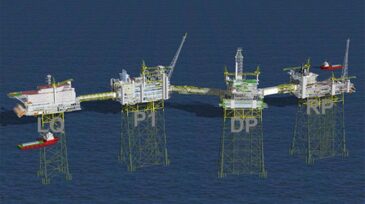
Before the giant Johan Sverdrup field had produced even one barrel of oil, operator Equinor and its license partners set a recovery ambition of greater than 70% for the field.
-
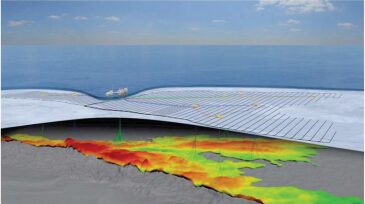
This paper presents the basic concepts and architecture of the Eni Reservoir Electromagnetic Mapping borehole electromagnetic mapping system that integrates borehole EM methodology with surface EM methods to provide real-time mapping of reservoir-fluid distribution during production or injection.
-
The complete paper describes the development of the “digital field worker” at Johan Sverdrup, an initiative that has changed the approach toward not only construction and completion but also operations.
-
The complete paper discusses optimization of a development plan involving low-salinity water injection.
-
Decline-curve analysis is one of the more widely used forms of data analysis that evaluates well behavior and forecasts production and reserves. This paper presents technologies that apply DCA methods to wells in an unbiased, systematic, intelligent, and automated fashion.
-
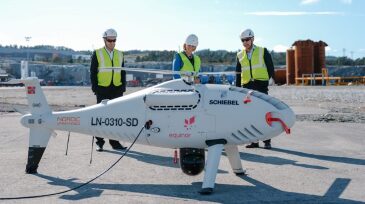
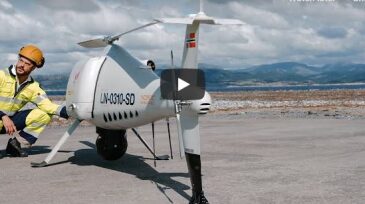
The Norwegian company completed what it describes as the world’s first logistics operation with a drone to an offshore installation.
-
Equinor said drones could reinforce safety, boost production efficiency and contribute to lower CO2 emissions from Norwegian oil and gas
-
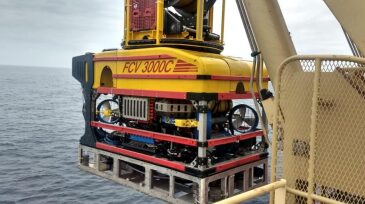
The 3-year contracts were awarded to Solstad, OceanPact, and Fugro.
-
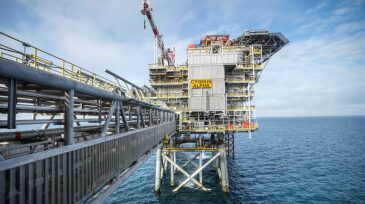
Using 3D and artificial intelligence technologies, a digital map of all three bridge-linked jackets was captured, enabling Neptune to detect asset-integrity issues early and plan fabric maintenance work on Cygnus.