Data & Analytics

This research focuses on combining physics-based expert rules with machine learning to improve the detection of failure-related events in electrical submersible pumps.

A combination of physics principles and machine-learning techniques is used in this work to develop a virtual flowmeter for oil-production optimization in electrical-submersible-pump-lifted oil wells, resulting in reliable generalization.

This paper presents the deployment of an artificial intelligence-enabled autonomous gas lift optimization system, integrating real-time centralized advanced process control with cloud-based analytics to enhance artificial gas lift performance in producer wells.
-
 To deliver digital twin technology for the upstream oil and gas markets, the Doris Group, Schneider Electric, and AVEVA are entering into a strategic partnership.
 -
Recent advances in data technology and machine learning have disrupted many businesses and processes and can lead to a new paradigm in workplace safety as well. This case study demonstrates the application of data science and predictive analytics to aid the health, safety, and environment function.
-
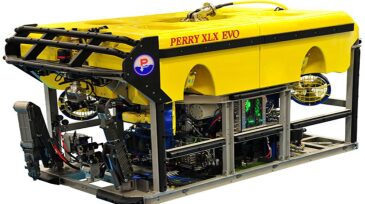
Development in software, technology, and a global 4G network combine to make ROV operations possible between offshore vessels and remote locations.
-
This story reviews well-adopted ideas that have stood the test of time, presenting a small set of techniques that covers a lot of basic knowledge necessary to understand modern deep learning research.
-
In industries where data is key to gaining competitive advantage, artificial intelligence and machine learning have become necessities. Tim Custer, senior vice president with Apache, shares how artificial intelligence is affecting the way the energy business operates.
-
An intelligent drilling optimization application performs as an adaptive autodriller. In the Marcellus Shale, ROP improved 61% and 39% and drilling performance, measured as hours on bottom, improved 25%.
-
The oil and gas industry is increasingly characterized by complex connectivity, but our digital dependency brings a new realm of cyber risks. Are we cyber-ready?
-
The E&P subsurface sector today faces the lowest reserve replacement ratios in decades as well as an increasing need to maximize recoverable oil and gas from developed fields.
-
Murphy Oil worked across its assets to create a tool called the Global Downtime Report (GDR). The GDR provides a global perspective of operational downtime data, focusing on nonproductive time related to drilling, completion, and production operations.
-
Logging-while-drilling remote operations has hit a wall. Since the outbreak of COVID-19, there is an increased demand for personnel with multidisciplinary skill sets to work on offshore rigs. But the demand cannot be satiated.