Data & Analytics

Working with Dell Technologies and NVIDIA, the French supermajor is targeting improved seismic processing and artificial intelligence applications.

A discussion at the inaugural executive breakfast convened by the SPE Data Science and Engineering Analytics Technical Section, held alongside CERAWeek by S&P Global and powered by Black & Veatch, tackled the challenge of value creation from artificial intelligence in the energy industry.

AI‑driven data center growth is straining US power grids and accelerating interest in enhanced geothermal systems as a scalable, low‑carbon solution.
-
 The authors of this paper evaluate the effectiveness of production-enhancement activities for a long-string, gas-lifted producer using distributed-temperature-sensing technology.
 -
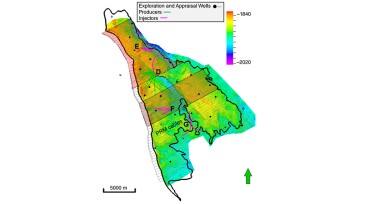
The authors of this paper write that 4D data are an integral part of a reservoir-management program and, together with geological and production history data, are being used to update reservoir models to further the goals of field development.
-
The authors of this paper describe the development of a continuous monitoring solution throughout its deployment.
-
Whether buying or selling, quality, non-production data can help operators achieve improved margins and less downtime, unlocking the true potential of their wells.
-
SponsoredEach well drilled, stimulated, and completed represents a significant investment in time, resources, and expenses. From artificial lift system design to maintenance scheduling, maximize your investment by ensuring optimal flow and production throughout the life cycle.
-
The company revealed programs for managing production and industrial asset performance. It also announced a collaboration aimed at enhancing rig visualization.
-
SPE Data Science and Engineering Analytics Technical Director Silviu Livescu and SPE Reservoir Technical Director Rodolfo Camacho address some of the challenges in the application of data analytics, artificial intelligence, and machine learning to several reservoir engineering problems.
-
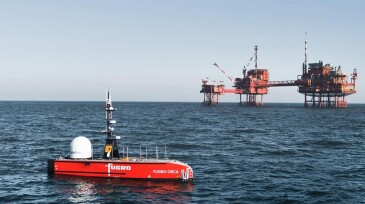
The company used an uncrewed surface vessel and an electric remotely operated vehicle to conduct a survey for TAQA in the North Sea.
-
The use of artificial intelligence in the clean energy sector increases the availability and accessibility of clean energy, making it a more viable and cost-effective alternative to traditional energy sources.
-
This paper introduces a measurement system that is agile for transport and can be installed anywhere with a small footprint while delivering reasonably accurate results.