Data & Analytics

Canada’s development of large-scale digital drilling core libraries and open geoscience data platforms follows approaches pioneered in Australia, particularly Western Australia, through decades of government investment in geoscience data collection and preservation.

This research focuses on combining physics-based expert rules with machine learning to improve the detection of failure-related events in electrical submersible pumps.

A combination of physics principles and machine-learning techniques is used in this work to develop a virtual flowmeter for oil-production optimization in electrical-submersible-pump-lifted oil wells, resulting in reliable generalization.
-
 The execution of process automation projects depends on the completion of tasks that are not necessarily related to automation, hampering project development timelines. How do automation solutions, such as digital twins, help to overcome these challenges?
 -
The international major has been playing with intelligent programs for years, but this new deal shows that it is now ready to scale those efforts up to cover hundreds of thousands of pieces of equipment.
-
The 5-year-old software startup is getting noticed by the oil and gas industry for its ability to accelerate analytics projects by taking care of all the tedious work involved with data wrangling.
-
“Greedy pursuit” in the realm of algorithms is a good thing. Saudi Aramco studied such algorithms to produce images simulating the flow inside a pipe’s cross section, possibly reducing the need for separator-based multiphase flowmeters.
-
BP has invested more than $100 million into nine different startup companies in the past 2 years—but only one of them wants to turn your brain into a piece of its software.
-
A new detection and alerting methodology, validated on more than 100 North America onshore wells, blends well information and real-time data to determine a probabilistic belief system. An operator used the system to detect, predict, and alert rig crews to washouts and pump failures.
-
Well-placement optimization is one of the more challenging problems in the oil and gas industry. Although several optimization methods have been proposed, the most-used approach remains that of manual optimization by reservoir engineers.
-
This paper proposes a new method of economic prediction on the basis of expert library and oilfield databases. The method takes into account geological factors and the effect of production factors on the economic prediction.
-
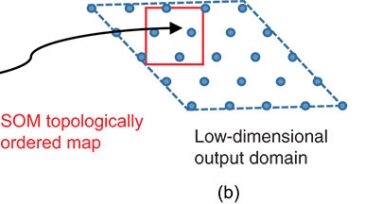
A new geostatistics modeling methodology that connects geostatistics and machine-learning methodologies, uses nonlinear topological mapping to reduce the original high-dimensional data space, and uses unsupervised-learning algorithms to bypass problems with supervised-learning algorithms.
-
This paper demonstrates the viability of a production-data-classification approach adapted from real-time face detection for identifying restimulation candidates.