Data mining/analysis

This case study presents the first field deployment of acoustic fracturing analysis to evaluate perforation efficiency and implement real-time interventions during pressure pumping.

This paper introduces in-pipe inspection technologies enabling high-resolution digital measurements of tubular internal diameter and wall thickness for critical downhole applications.

This paper describes an approach to creating a digital, interconnected workspace that aligns sensor data with operational context to place the completions engineer back into a central role.
-
 The industry’s vast untapped data resources have the potential to change how our industry works—if we can piece it together.
 -
This paper presents the processes of identifying production enhancement opportunities, as well as the methodology used to identify underperforming candidates and analyze well-integrity issues, in a brownfield offshore Malaysia.
-
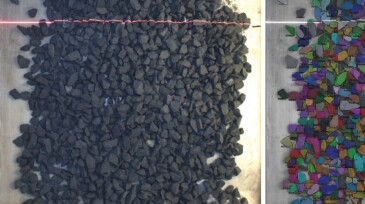
This paper proposes a holistic, automatic, and real-time characterization of cuttings/cavings, including their volume, size distribution, and shape/morphology, while integrating 3D data with high-resolution images to pursue this objective for use in the real-time assessment of hole cleaning sufficiency and wellbore stability and, consequently, for the prediction, prev…
-
A self-updating and customizable data-driven strategy for real-time monitoring and management of screenout, integrated with proppant filling index and safest fracturing pump rate, is proposed to improve operational safety and efficiency at field scale.
-
This paper addresses the challenges of integrating huge amounts of data and developing model frameworks and systematic workflows to identify opportunities for production enhancement by choosing the best candidate wells.
-
From the first supercomputer to generative AI, JPT has followed the advancement of digital technology in the petroleum industry. As the steady march of innovation continues, four experts give their views on the state and future of data science in the industry.
-
This paper presents an approach for automatic daily-drilling-report classification that incorporates new techniques of artificial intelligence.
-
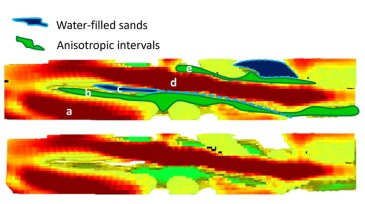
The authors of this paper describe an approach in which all available technologies are combined to improve understanding of reservoir depositional environments.
-
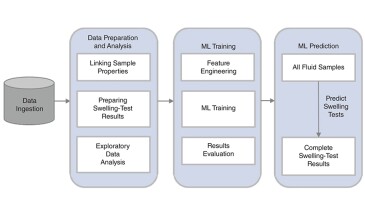
The authors of this paper present a machine-learning-based solution that predicts pertinent gas-injection studies from known fluid properties such as fluid composition and black-oil properties.
-
In this paper, the authors present data analyses to comprehensively evaluate the performance of a steady-state multiphase-flow point model in predicting high-pressure, near-horizontal data from independent experiments.