Decarbonization
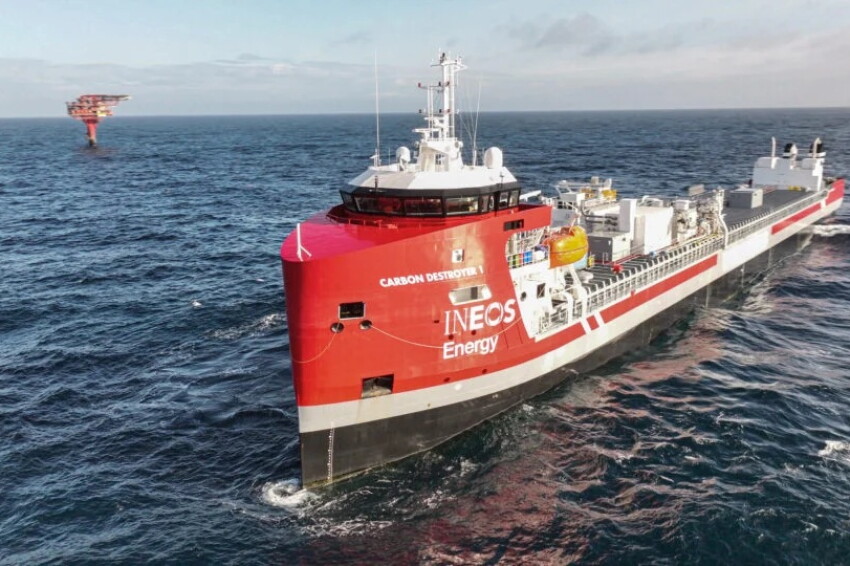
Plans call for the Greensand project to store 400,000 tonnes of carbon dioxide annually, with the potential to store up to 8 million tonnes annually at full capacity.
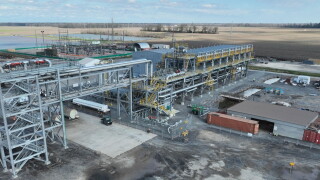
In line with its recently released Global Outlook, the major has begun storing carbon dioxide from Nucor’s iron facility in Convent, Louisiana.
Natural Resources Canada has awarded $4 million to Next Hydrogen and CERT Systems to advance clean hydrogen production and low-carbon sustainable aviation fuel technologies in the Greater Toronto Area.
-
 SponsoredTAQA bears the burden of reducing carbon emissions from the fossil fuel energy cycle and pays its undivided attention to decarbonizing its operations. In this article, it sheds light on its initiatives and approach to decarbonizing the oil and gas exploration and production industry.
 -
Government grants and tax incentives will drive carbon capture, storage, and/or utilization projects in the next decade as the industry seeks profitable business model.
-
Despite more than 3 decades of intense focus on emissions issues, global emissions have only increased instead of going down. It’s imperative to question the efficacy, premises, practicality, and overlooked hurdles of current approaches.
-
Last month in North Dakota, over coffee and kuchen, my friend Dick shared his challenges with vague offers for leasing his pore space. As legal rulings and tax credits complicate the landscape, landowners face a murky world of deals. How can a proposed deal be determined as good or bad?
-
This paper proposes two new methods of accelerating the solidification (or mineralization) of CO2 in subsurface conditions, thus accelerating the cycle of the CO2 storage process.
-
The aim of this study is to address and discuss the reservoir engineering aspects of geological hydrogen storage.
-
This paper examines the shortfalls of current CO2 capture and storage measures and their future within the context of increasing global consumption of fossil fuels.
-
The Permian’s produced-water challenge presents an opportunity for innovation to pave the way toward a more sustainable future for the industry.
-
An economic analysis of a wellbore methodology in natural gas fields that uses gasification of methane within the wellbore (not within the reservoir) for hydrogen production while incorporating simultaneous sequestration of carbon. This new methodology offers significant energy and cost savings in addition to zero carbon being produced to the surface.
-
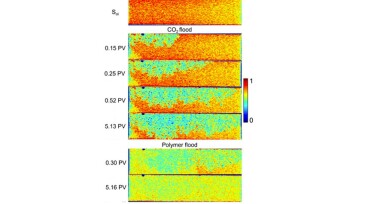
In this paper, the authors propose polymer-assisted water-alternating-gas (WAG) injection as an alternative method to reduce gas mobility while reducing the mobility of the aqueous phase and, consequently, improving WAG performance.