Digital Oil Field

The paper presents the design and successful field deployment of the first closed-loop hydraulic fracturing program.

This paper presents the first global application of autonomous drilling in deepwater and the journey to reach optimal drilling parameters, integrating proprietary tools from the project’s business partners.

The paper describes the revalidation of a deepwater prospect that resulted in a no-drill decision.
-
 According to a World Economic Forum report, digital transformation in the oil and gas industry could unlock approximately $1.6 trillion of value for the industry, its customers, and wider society while creating around $1 trillion of value for oil and gas firms.
 -
Technology is advancing, and applications are growing, but scaling faces technological and human challenges.
-
COVID-19 has significantly accelerated the adoption of digital technologies across all industries, and the oil and gas industry has been no exception. As such, interest in digital data acquisition, which is the backbone of all digital transformation work flows, also has increased significantly.
-
The customizable Internet of things service is designed for monitoring onshore and offshore remote assets.
-
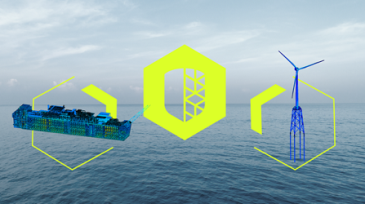
The agreement will see Akselos become one of the global energy company’s verified suppliers for structural integrity assessments, forming part of Shell’s newly formed Digital Twin Platform.
-
The AI partnership combines Wood’s optimization platforms with Cognite’s Data Fusion product to develop solutions for the energy transition and free up data from fragmented and legacy systems.
-
A systematic approach to ensure quality assurance is intended to build confidence and accelerate the uptake of digital twins.
-
New guidelines from the European Union Agency for Cybersecurity recommend that all stages of the IoT device lifecycle need to be considered to help ensure devices are secure.
-
The success of any digital oilfield project is predicated on the quality of the data structure, acquisition, communication, validation, storage, retrieval, and provenance of the data.
-
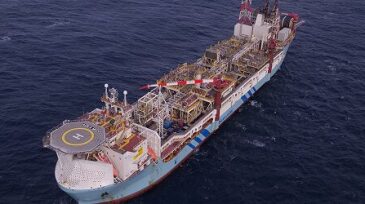
DNV GL and floating production, storage, and offloading (FPSO) vessel specialist Bluewater are undertaking a pilot project to use hybrid digital twin technology to predict and analyze fatigue in the hull of an FPSO in the North Sea.