Digital Oil Field

The paper presents the design and successful field deployment of the first closed-loop hydraulic fracturing program.

The authors describe a study on key technologies for intelligent risk monitoring of workover operations.

The authors write that by replacing outdated, labor-intensive processes with an integrated, cloud-based platform, companies can streamline planning, improve accuracy, and foster better coordination across teams and vendors.
-
 This digital deal is helping to make augmented reality a new reality for oil and gas operations.
 -
The operator piloted a new well-completion design combining inflow-control valves (ICVs) in the shallow reservoir and inflow-control devices (ICDs) in the deeper reservoir, both deployed in a water-injector well for the first time in the company’s experience.
-
The two technology startups aim to bring scale to the visual side of oilfield automation with a new deal that will cover 90% of US energy assets.
-
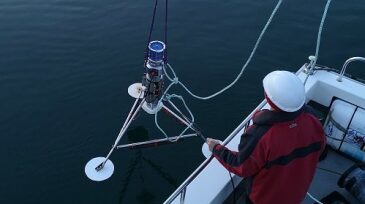
The company plans an innovative application of oceanographic instrumentation to maximize recovery at its Johan Sverdrup oil field in the North Sea.
-
The need to understand the future trends of the oil industry has never been greater than it is today.
-
In this study, the authors investigated a fully data-driven approach using artificial neural networks (ANNs) for real-time virtual flowmetering and back-allocation in production wells.
-
The authors detail the development of a technique based on surface-to-borehole controlled-source electromagnetics (CSEM), which exploits the large contrast in resistivity between injected water and oil to derive 3D resistivity distributions, proportional to saturations, in the reservoir.
-
In this paper, the authors describe a project to design, field trial, and qualify an alternative solution for real-time monitoring of the oil rim in carbonate reservoirs that overcomes these disadvantages.
-
This industry is one often considered reactive and overly tradition-bound. These new technologies, however—and, more importantly, the drive of these researchers to harness their capabilities—prove that petroleum engineers remain at the forefront of innovation and discovery.
-
The world’s largest oilfield services firm and one of the largest providers of SCADA systems have formed a joint venture to create Sensia, an integrated automation suite.