Digital Oil Field

The paper presents the design and successful field deployment of the first closed-loop hydraulic fracturing program.

The authors describe a study on key technologies for intelligent risk monitoring of workover operations.

The authors write that by replacing outdated, labor-intensive processes with an integrated, cloud-based platform, companies can streamline planning, improve accuracy, and foster better coordination across teams and vendors.
-
 In a collaborative project, the possibility of measuring fluid levels in a wellbore by use of distributed optical pressure gauges was conceived, prototyped, field-trialed, and further developed to a point of widespread commercialization.
 -
SponsoredThe rise of digital transformation initiatives – specifically Industrial Internet of Things (IIoT) projects – is forcing O&G operators to rethink conventional, siloed operations. Learn how to bring IT and Operations together to maximize the value of IIoT across your business.
-
SponsoredA new report takes a look at how digital technologies are disrupting the Oil & Gas industry and provides practical strategies for organizations to manage the process.
-
The petroleum industry is becoming increasingly dependent on digital systems, and companies have ambitious plans for increased use of digital technology—along the entire value chain. A new report shows how digitalization affects health, safety, and the environment.
-
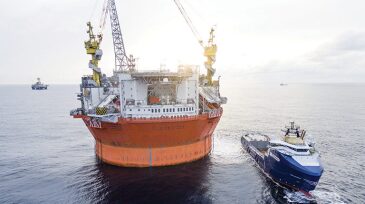
Statoil’s integrated operations center on the Norwegian continental shelf is one of several initiatives operators and service companies have set in motion to improve condition monitoring and maximize production on their assets.
-
There are two ongoing trends in the industry. The first is an increasing wave of digitization. Second, piggybacking on the increased access to sensor and equipment data, analytics and artificial intelligence are on an exponential rise in the industry.
-
The complete paper provides an overview of the development of fiber-optic sensing for steam-assisted-gravity-drainage (SAGD) applications, including a review of more than 10 years of work in development and field applications in western Canada.
-
The complete paper describes a work flow in which wells and production networks in the Cheleken Block offshore Turkmenistan are automatically modeled daily with steady-state and transient tools and ultimately analyzed by the Cheleken Block Central Data Gathering System.
-
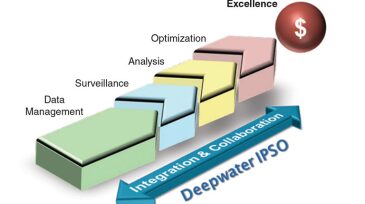
The complete paper describes some of the technical challenges faced in deepwater operations and the methodology adopted for implementing an integrated production surveillance and optimization (IPSO) system to mitigate the risks.
-
The papers selected for this issue cover advances and opportunities in well testing. They also apply reservoir fundamentals as well as sound engineering judgment, using quantity but also quality data sets from conventional and unconventional assets.