Digital Oil Field

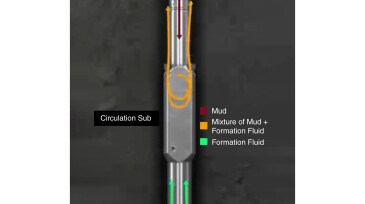
This research focuses on combining physics-based expert rules with machine learning to improve the detection of failure-related events in electrical submersible pumps.

A combination of physics principles and machine-learning techniques is used in this work to develop a virtual flowmeter for oil-production optimization in electrical-submersible-pump-lifted oil wells, resulting in reliable generalization.

This paper presents the deployment of an artificial intelligence-enabled autonomous gas lift optimization system, integrating real-time centralized advanced process control with cloud-based analytics to enhance artificial gas lift performance in producer wells.
-
 This paper addresses the challenges related to well control and the successful implementation of deep-transient-test operations in an offshore well in Southeast Asia carried out with the help of a dynamic well-control-simulation platform.
 -
The digital twin aims to allow Petrobras to optimize system settings to maximize production, increase recovery, and reduce risk.
-
For today’s oil and gas companies, digital twins offer untapped potential to decarbonize the leading source of their emissions—field production.
-
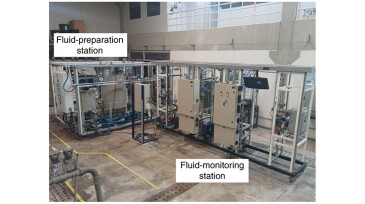
This paper presents the concept of a supervisory and advisory system dedicated to support the detection of abnormal events and to provide guidelines for fluid treatment.
-
The authors of this paper describe a procedure that enables fast reconstruction of the entire production data set with multiple missing sections in different variables.
-
This paper presents a physics-assisted deep-learning model to facilitate transfer learning in unconventional reservoirs by integrating the complementary strengths of physics-based and data-driven predictive models.
-
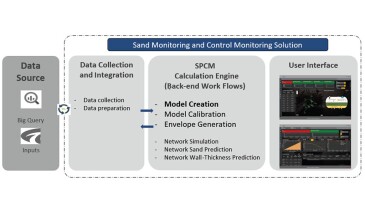
The authors of this paper propose an automated approach to sand prediction and control monitoring that improved operational efficiency by reducing time spent on manual analysis and the decision-making process in a Myanmar field.
-
We must admit that the oil field is still in the early days of its digital journey. It’s time to give serious thought to the expectation/reality gap, the cultural differences between the way we’ve always done things and the way that digital is changing us, and the pain points that may trip us up unless we’re careful.
-
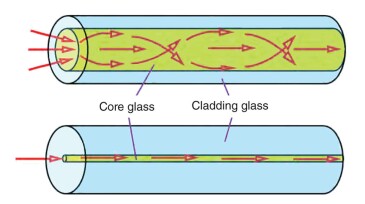
This paper presents a comprehensive technical review of applications of distributed acoustic sensing.
-
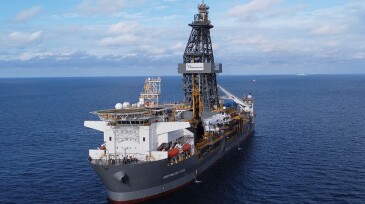
The heated global floating rig market has day rates for high-end units climbing over a half million dollars and toward a newbuild cycle that will (likely) never come.