Digital Oil Field

This research focuses on combining physics-based expert rules with machine learning to improve the detection of failure-related events in electrical submersible pumps.

A combination of physics principles and machine-learning techniques is used in this work to develop a virtual flowmeter for oil-production optimization in electrical-submersible-pump-lifted oil wells, resulting in reliable generalization.

This paper presents the deployment of an artificial intelligence-enabled autonomous gas lift optimization system, integrating real-time centralized advanced process control with cloud-based analytics to enhance artificial gas lift performance in producer wells.
-
 This paper presents an intelligent tube solution that combines data retrieved by the sensors with the actual resistance of each pipe in the well to allow adjustment of production parameters while ensuring installation safety.
 -
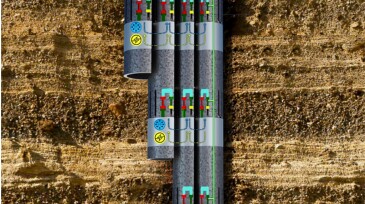
This paper describes an intelligent completion design installed in two deepwater wells with dual-zone stack-pack sand-control lower completions and the installation of an intermediate string to isolate the reservoir in each zone.
-
This paper describes a solutions hub that integrates engineering tools to maximize value and improve decision quality using recent digital technologies.
-
This paper proposes a series of work flows to simplify model deployment and set up an automatic advisory system to provide insight in justifying an engineer’s day-to-day engineering decisions.
-
This paper presents an artificial intelligence algorithm called dual heuristic dynamic programming that can be used to solve petroleum optimization-control problems.
-
This paper describes an approach implemented by the operator to solve research and development challenges by creating in-house infrastructure of both software and hardware.
-
This paper compiles recommendations from a broad range of sources into a single document to aid future intelligent-completion installations and operations.
-
The supermajor and oilfield service company have teamed up for the second time in 4 years on the deployment of a new optimization software.
-
The authors of this paper evaluate the effectiveness of production-enhancement activities for a long-string, gas-lifted producer using distributed-temperature-sensing technology.
-
The authors of this paper write that 4D data are an integral part of a reservoir-management program and, together with geological and production history data, are being used to update reservoir models to further the goals of field development.