Drilling/completion fluids

This paper discusses the successful execution of two openhole gravel-pack completions in two Gulf of Mexico fields with depleted reservoirs.

As unconventional hydraulic fracturing matures, completions practices shift from art to engineering best practices.

This paper establishes that the use of a dual-gradient fluid column during the running of large casing in an extreme-reach deepwater well is an effective method to overcome drag and enable the casing to reach total depth.
-
 Advancements in new technologies and rigorous testing methods have enabled the authors of the three SPE papers featured this year to outline a path forward, offering new possibilities that uphold the core objectives of safety and productivity.
 -
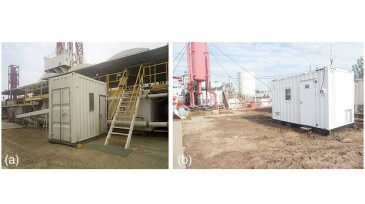
This paper highlights a new online system for monitoring drilling fluids, enabling intelligent control of drilling-fluid performance.
-
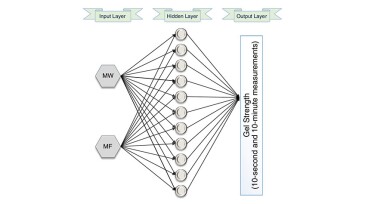
This paper investigates the use of machine-learning techniques to forecast drilling-fluid gel strength.
-
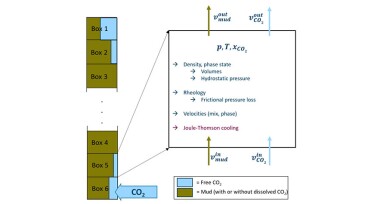
This paper aims to close some of the many knowledge gaps that exist in the field of drilling CO₂ storage wells, a task that is expected to involve handling an influx of CO₂ into the drilling fluid.
-
This year’s primary selections for the Drilling and Completion Fluids Technology Focus reflect now-well-established industrywide emphases on machine learning, automation, and the achievement of successful drilling of CO₂ storage wells.
-
We’re thrilled to announce the launch of the 2025 SPE/JPT Drilling and Hydraulic Fracturing Technology Review. This exclusive, official publication will be distributed at three major SPE industry events.
-
A fundamental research study is conducted to confirm the potential usefulness of chelating agents in dispersing settled barite, emphasize the complex nature of the factors that control this process, and provide a solid basis for future studies aimed at optimizing dispersion methods in industrial applications.
-
A universal, automated approach to condition-based maintenance of drilling rig mud pumps is developed using acoustic emission sensors and deep learning models for early detection of pump failures to help mitigate and reduce costs and nonproductive time generally associated with catastrophic pump failures.
-
Computational fluid dynamics modeling is used to gain better understanding of filter-cake formation in inclined and vertical well drilling operations under elevated temperature and pressure, highlighting the importance of controlling fluid invasion to optimize drilling performance.
-
This paper details a gravel packing operation in the Martin Linge field in the North Sea that marks the highest density carrier fluid openhole gravel pack completed successfully worldwide, setting a new standard for well completions in challenging high-pressure environments.