Drilling
Research by Enervus sees early 2026 permitting activity for the carbon capture and storage wells pointing to a growing approval queue, even while the rate of applications eases.

The new guidelines were released prior to reports that enhanced geothermal developer Fervo Energy experienced a blowout in Utah with no reported injuries.
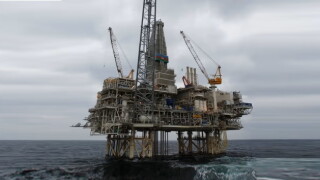
BP said it expects to keep the Azeri-Chirag-Gunashli (ACG) project in production into the 2040s by tapping into separate nonassociated gas reservoirs.
-
 Design, implementation, and operation of the Cascade and Chinook field development project in ultradeep water in the Lower Tertiary play of the Gulf of Mexico.
 -
Drilling, completion, production, and general surveillance are all areas that benefit greatly from remote real-time analysis. However, several challenges to remote services exist, including communications issues, fear of job loss, and working outside one’s comfort zone. What is considered an important development goal for a business might be regarded as a threat to an…
-
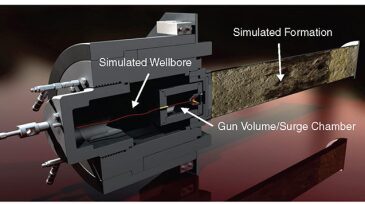
Recently, a series of instrumented perforation experiments demonstrated that existing cleanup models do not accurately predict perforation cleanup when perforating in a DUB condition.
-
Recently, while preparing to present a seminar on deepwater-well-construction optimization, I tried hard to find a word or a phrase that could be seen as “the secret” for a safe and optimized drilling performance.
-
Data-mining processes are fundamental in obtaining the predictive benefits of real-time systems and have been progressing from descriptive to predictive optimization methods.
-
During the optimization process, the Castilla field became the model of management strategies for the rest of the fields in the company portfolio.
-
Integration of technology applications is paramount in increasing the success rate of data delivery.
-
-
The general industry perception is that, when drillstrings or casing strings exceed conventional helical-buckling criteria, they cannot be operated safely in the hole because the risk of failure or lockup is too high.
-
The producing assets of unconventional shale-gas and shale-oil plays in North America are among the strategic alternatives for future growth of exploration-and-production companies.