Drilling
Research by Enervus sees early 2026 permitting activity for the carbon capture and storage wells pointing to a growing approval queue, even while the rate of applications eases.

The new guidelines were released prior to reports that enhanced geothermal developer Fervo Energy experienced a blowout in Utah with no reported injuries.
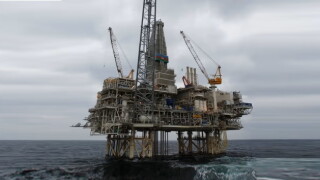
BP said it expects to keep the Azeri-Chirag-Gunashli (ACG) project in production into the 2040s by tapping into separate nonassociated gas reservoirs.
-
 ExxonMobil, operator for the Sakhalin-1 project, planned an additional drilling campaign at the Chayvo field, Sakhalin Island, Russia.
 -
In 2012, the number of unconventional tight gas/shale and high-pressure/high-temperature (HP/HT) papers continued to grow. This year, we had some very interesting developments in these and other areas of well construction.
-
This case history presents the highly challenging extended-reach deepwater well, Ursa A-10, drilled in the Ursa (Latin for bear) prospect in the US Gulf of Mexico (GOM).
-
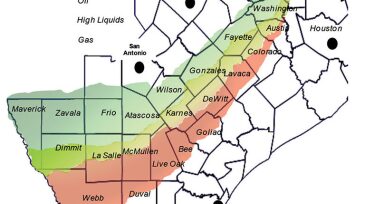
The Eagle Ford shale in Zavala County, Texas, is similar to many high-carbonate-content oil-shale formations.
-
To maintain zonal isolation throughout the life of a high-pressure/high-temperature (HP/HT) well, the cement sheath must perform reliably at temperatures that can exceed 315°C.
-
The Granite Wash formation presents several challenges in drilling the build section from a vertical open hole to form a lateral.
-
As operators continue to drill into deeper and more-extreme formations, the demand for technologies suited to these environments increases.
-
With exploration in harsh environments and consequent high-pressure and high-temperature conditions, calculating reservoir properties has become complex and changes in pressure-transient response need to be understood and appreciated by taking appropriate measures.
-
FPWD provided a direct pressure measurement while drilling to set the lower boundary, and formation-integrity tests (FITs) with MPD provided the upper boundary.
-
We all know that things have changed significantly for offshore drilling and completion in the last 3 years. Regulations have been reviewed, and operational procedures and requirements have changed.