Drilling

This paper aims to establish a set of best practices for generating particle-size-distribution data from core samples.

This paper discusses the successful execution of two openhole gravel-pack completions in two Gulf of Mexico fields with depleted reservoirs.

This edition highlights three offshore technology papers that address a common industry theme: how targeted engineering solutions can reduce uncertainty, shorten operations, and make technically constrained offshore well activities more executable.
-
 This paper shows how automation reduces invisible lost time and allows drillers to focus on other activities while repetitive tasks are controlled by software.
 -
To accelerate learning, an operator deployed a real-time, closed-loop downhole automation system (DHAS) in conjunction with wired drillpipe in the 8¾-in.-hole section.
-
This paper presents the LCDSS and elaborates on the use of it in the preparation and training phase and the operational phase, including forecasting.
-
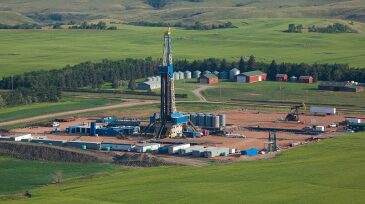
In the Eagle Ford, an integrated approach to engineering and operations was key to optimize performance and improve understanding of the area.
-
Wireline continuous coring (WCC) has been adapted from the mining industry for unconventional resources. This paper is aimed at identifying and addressing complications experienced in the use of WCC.
-
Precise casing-wear prediction is important for improving well integrity and longevity, while simultaneously making casing designs more cost-effective. There are no industry guidelines for casing-wear prediction. This article presents a validated predictive model.
-
A number of companies are pushing for alternative approaches to offshore development that seek to access marginal reservoirs. Their differing and unique ideas call for a departure from the usual playbook, but share a common goal of slashing capital costs.
-
This paper analyzes differing well-factory approaches to unconventional assets, with examples from the Wolfcamp unconventional oil play in the Permian Basin.
-
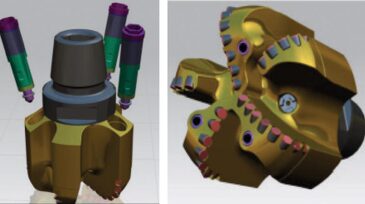
Baker Hughes is developing a drill bit capable of auto-adjusting its depth-of-cut feature to handle dynamic drilling conditions.
-
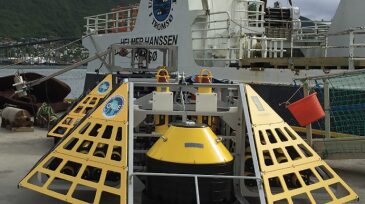
Anyone selling something new for offshore exploration and production has to be able to answer a simple question from customers, “How can we save some money?” For Norwegian oil companies, change is coming in many forms: steel, sensors, software, and standards.