Drilling

This paper presents the application of degradable particulate-diverter technology to improve oil production by effectively diverting stimulation treatment fluids away from high-water-cut, high-permeability, high-temperature producing intervals or zones.

This paper presents the methodology for developing drill-in organophilic clay-free invert-emulsion-fluid technology that enhances well production through fundamental geological studies and fluid testing.

This paper presents the large-scale deployment and operational integration of an advanced, automated rheometer in the Ghawar gas field, one of the world’s most prolific and technically complex hydrocarbon developments.
-
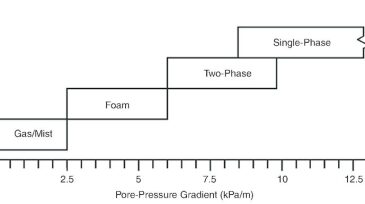
 Air drilling has become popular in the Marcellus and Utica shale reservoirs because of its higher rate of penetration (ROP) and less resulting formation damage.
-
This study concerns the mature Gyda reservoir, where some recent production wells have underperformed relative to equivalent initial wells.
-
Production and drawdown data from 10 subsea deepwater fractured wells have been modeled with an analytical model for unsteady-state flow with fines migration.
-
In order to avoid some of the detrimental effects of formation damage, a key aspect is laboratory testing of representative core material under representative downhole conditions.
-
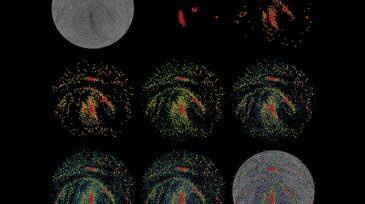
The paper presents a new approach that uses X-ray-microcomputed-tomography (micro-CT) scanning to produce high-resolution data of entire core samples.
-
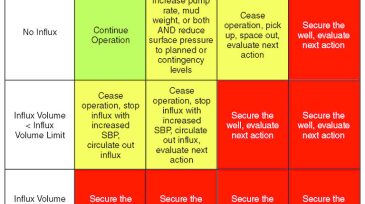
This is an update on several managed-pressure drilling (MPD) technologies and downhole drilling performance-enhancing tools in use onshore and is the first of a two-part series. The second article on offshore MPD technologies will appear in the February issue of JPT.
-
An ongoing research project started nearly 3 years ago by the US Department of Energy’s National Energy Technology Laboratory (NETL) is shedding new light on what really happens to foamed cement as it is pumped deep down offshore wells during completions.
-
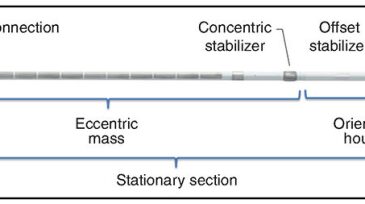
A 100% fully mechanical rotary-steerable tool has been developed specifically for the high-volume drilling market, providing full 3D directional control while under full rotation of the drillstring from surface.
-
The recent introduction of a new rolling-cutter polycrystalline-diamond-compact (PDC) bit that uses 360° of the diamond edge has delivered positive results in field trials.
-
Conventional drilling through lower intermediate intervals in the southern portion of the Alpine field on Alaska’s North Slope has posed significant challenges.