

Drilling

Research by Enervus sees early 2026 permitting activity for the carbon capture and storage wells pointing to a growing approval queue, even while the rate of applications eases.

The new guidelines were released prior to reports that enhanced geothermal developer Fervo Energy experienced a blowout in Utah with no reported injuries.
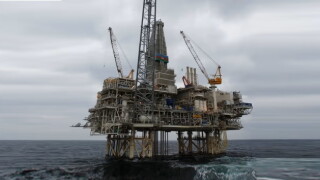
BP said it expects to keep the Azeri-Chirag-Gunashli (ACG) project in production into the 2040s by tapping into separate nonassociated gas reservoirs.
-
 The Granat prospect on the Norwegian Continental Shelf may be developed with a subsea tieback to existing infrastructure.
 -
Eni reports its latest deepwater exploration well offshore Côte d'Ivoire found gas and condensate in high-quality Cenomanian sands in the Calao channel complex.
-
Autonomous drilling through managed pressure drilling (MPD) at the Atlantis field has given the operator confidence to scale the method.
-
The deal positions the merged company to benefit from an expected offshore drilling upcycle.
-
An earlier deal to double Israel’s gas exports to Egypt led to approval of Leviathan’s Phase 1B expansion by guaranteeing long-term cash flow to finance the project.
-
Rystad Energy expects the continent to account for the largest share of frontier and basin-opening wells in 2026 as operators pursue scale and untapped resources.
-
This paper presents a multifaceted approach leveraging precise rig control, physics models, and machine-learning techniques to deliver consistently high performance in a scalable manner for sliding.
-
This paper proposes a novel approach toward drilling maximum-reservoir-contact wells by integrating automated drilling and geosteering software to control the downhole bottomhole assembly, thereby minimizing the need for human intervention.
-
When it comes to drilling automation, deciding where your technology should be deployed is a critical factor in overall solution design. Similar to other industries, there is an eternal debate on the merits of cloud vs. edge systems.
-
Among the awards are contracts for four currently idle deepwater rigs.


